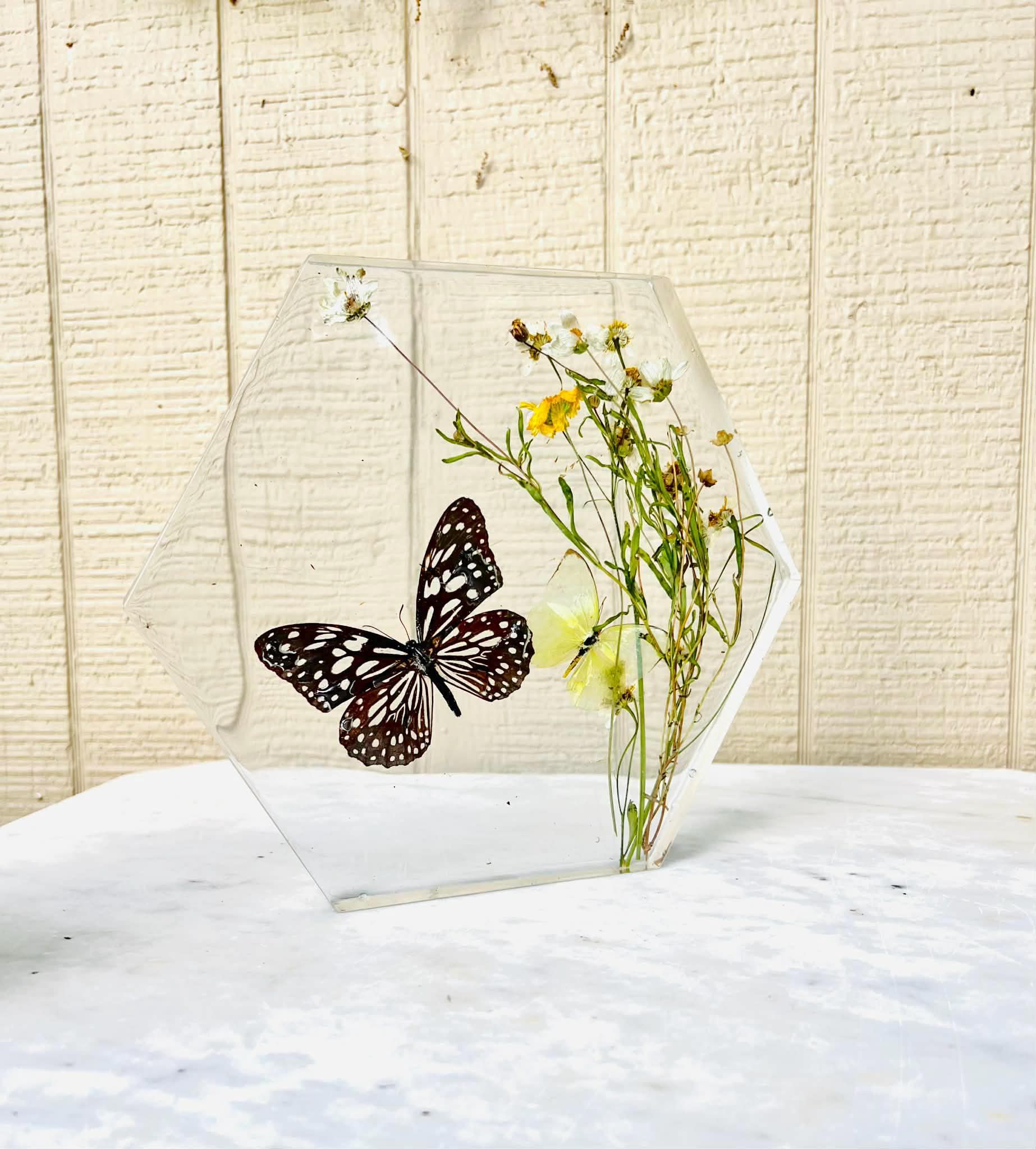
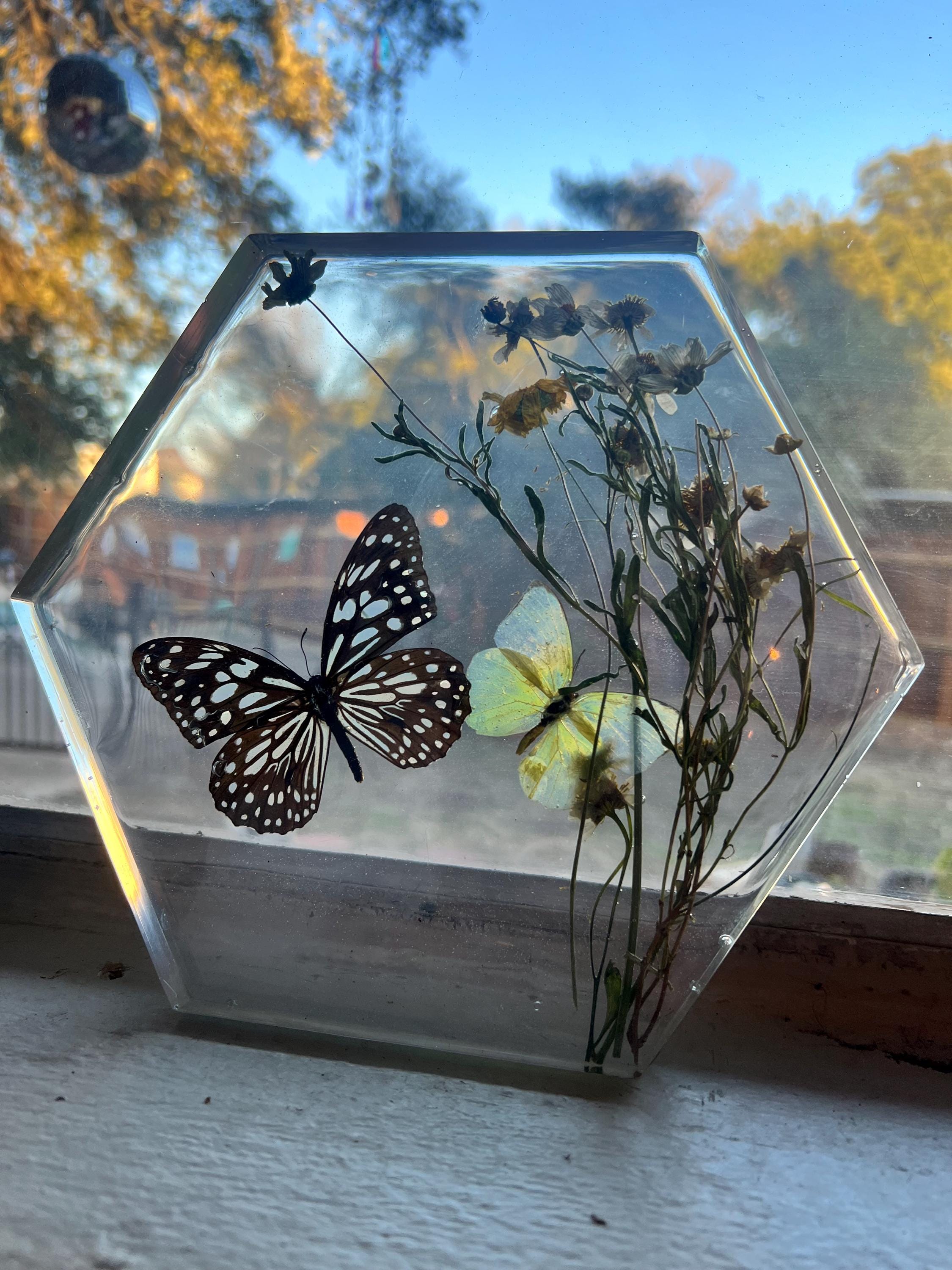
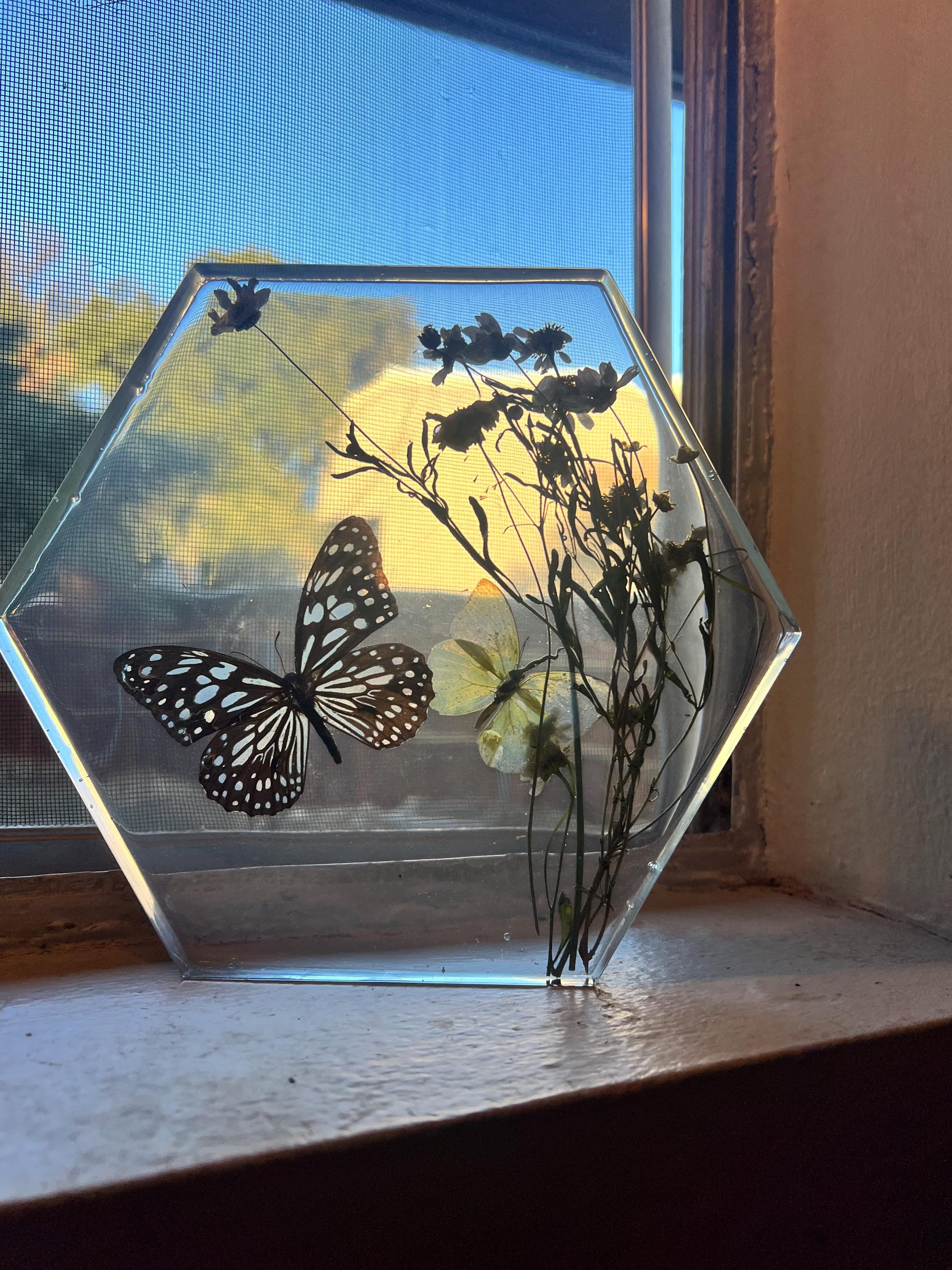
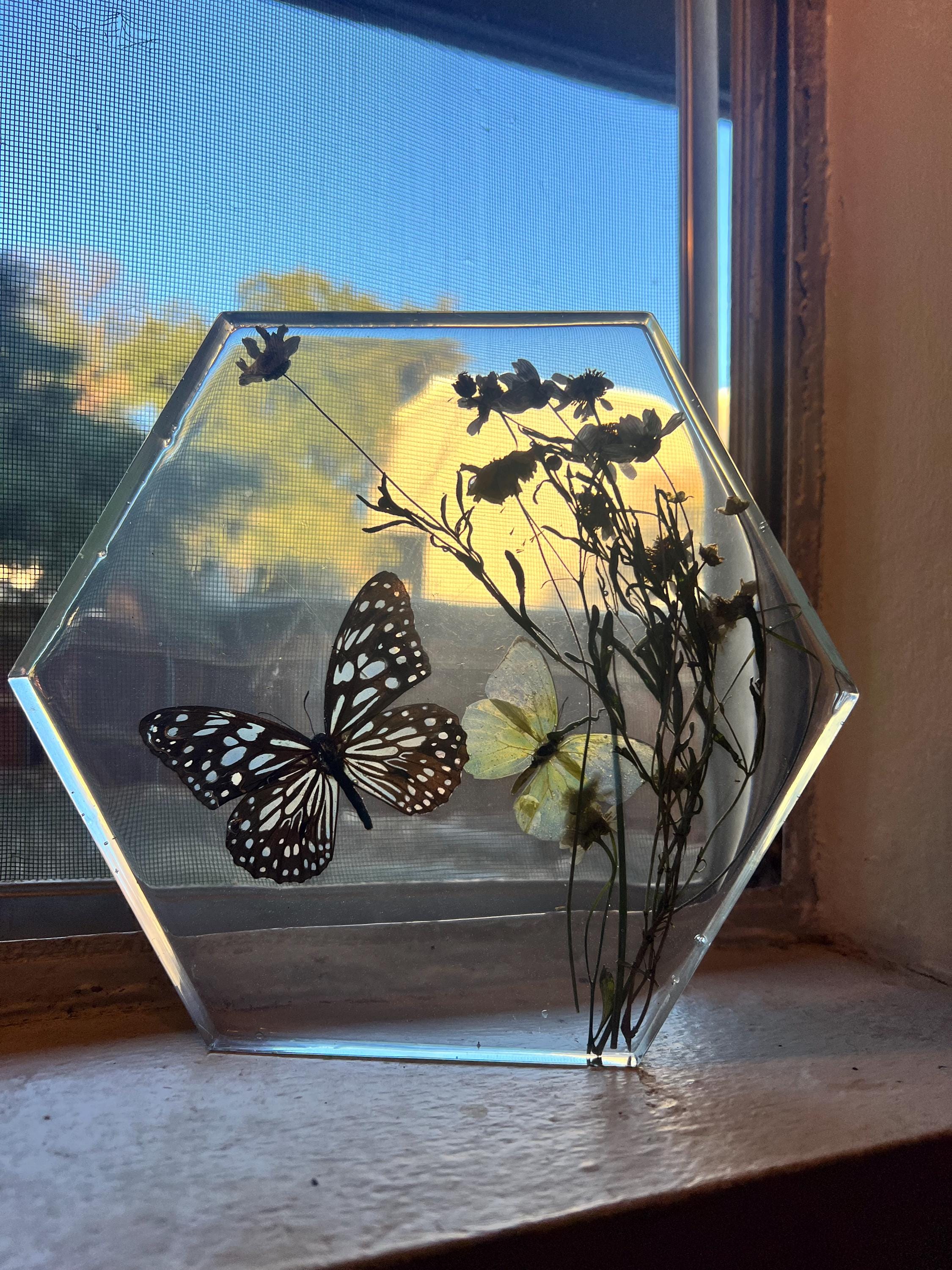
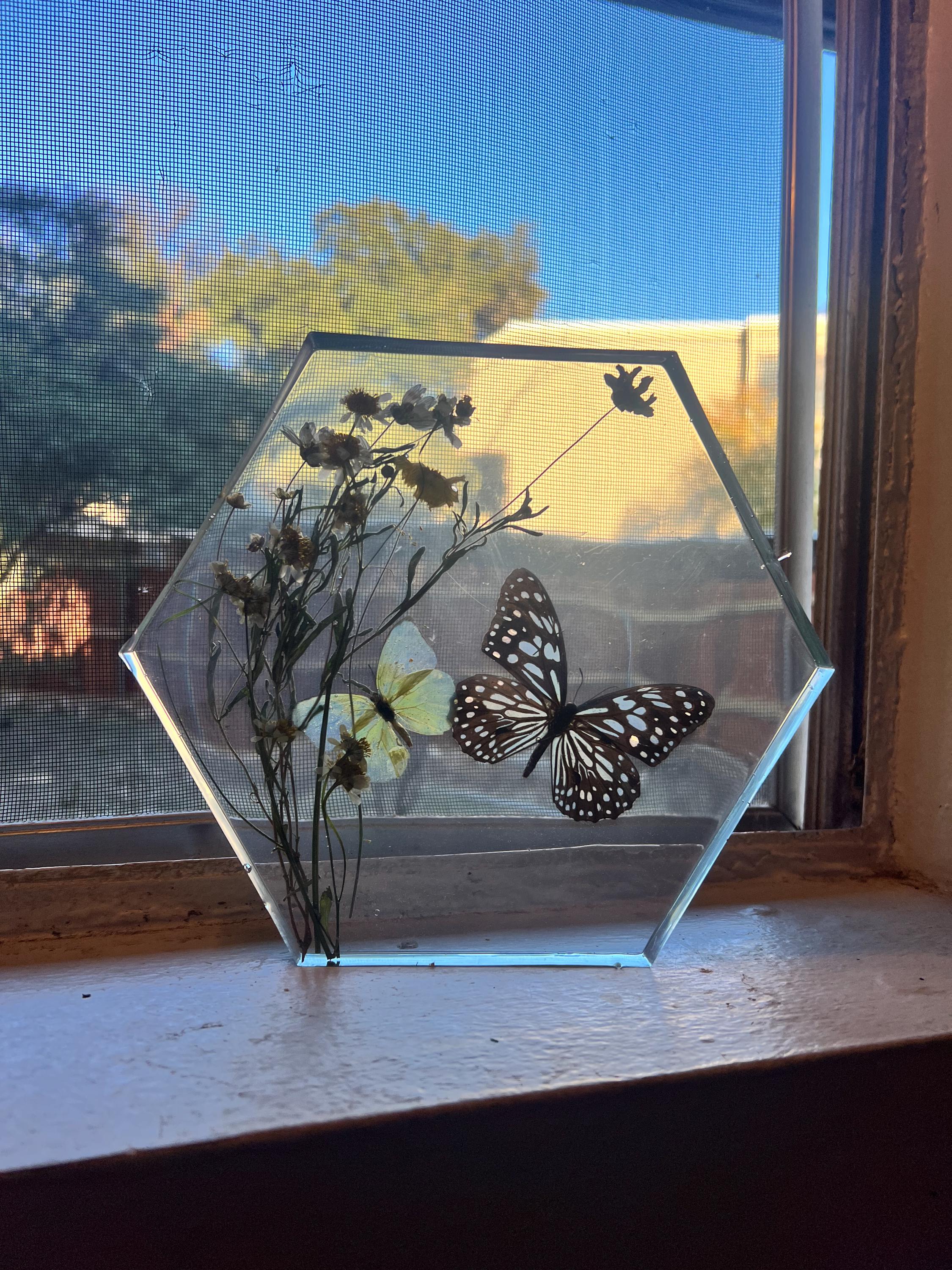
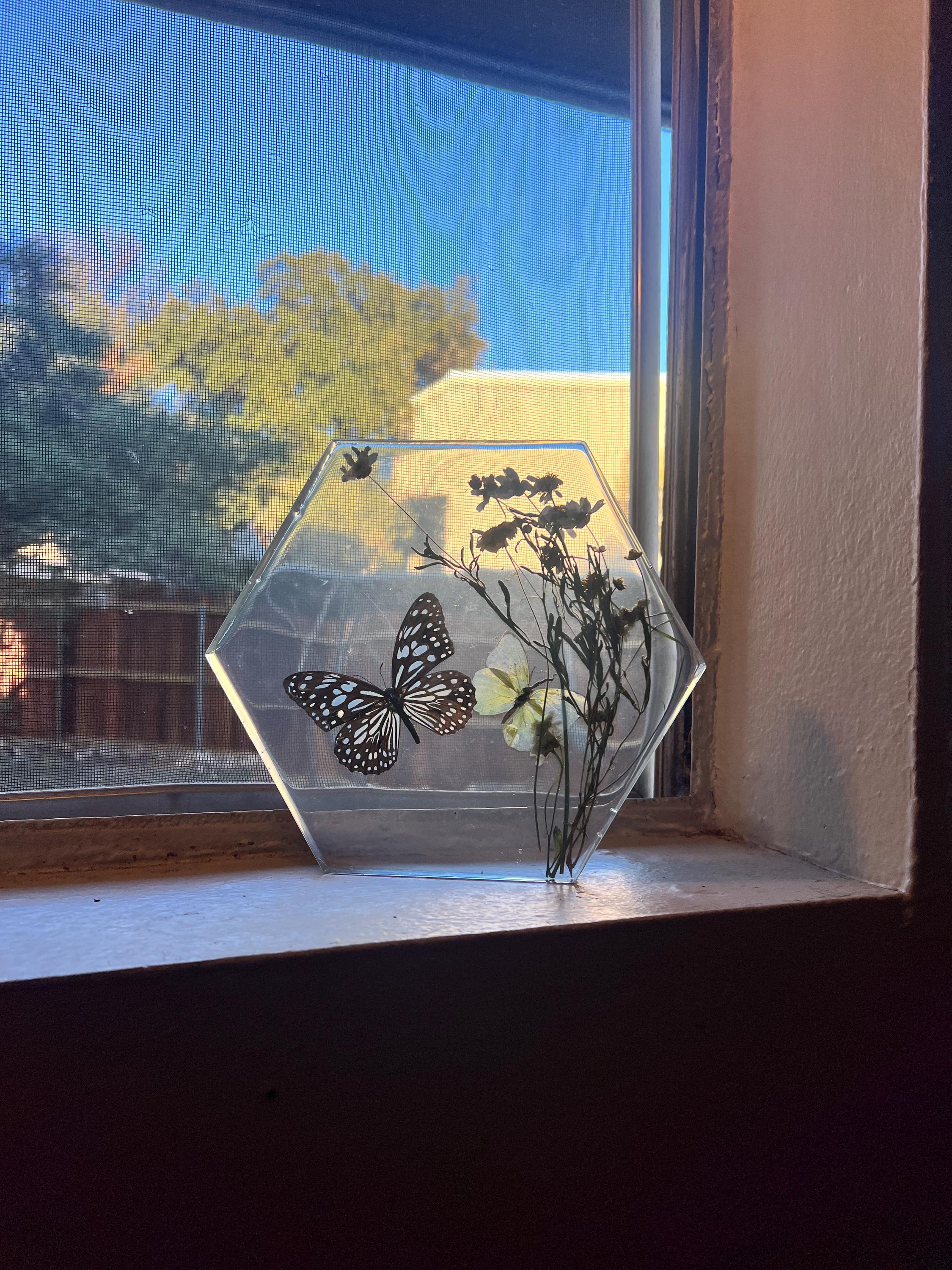
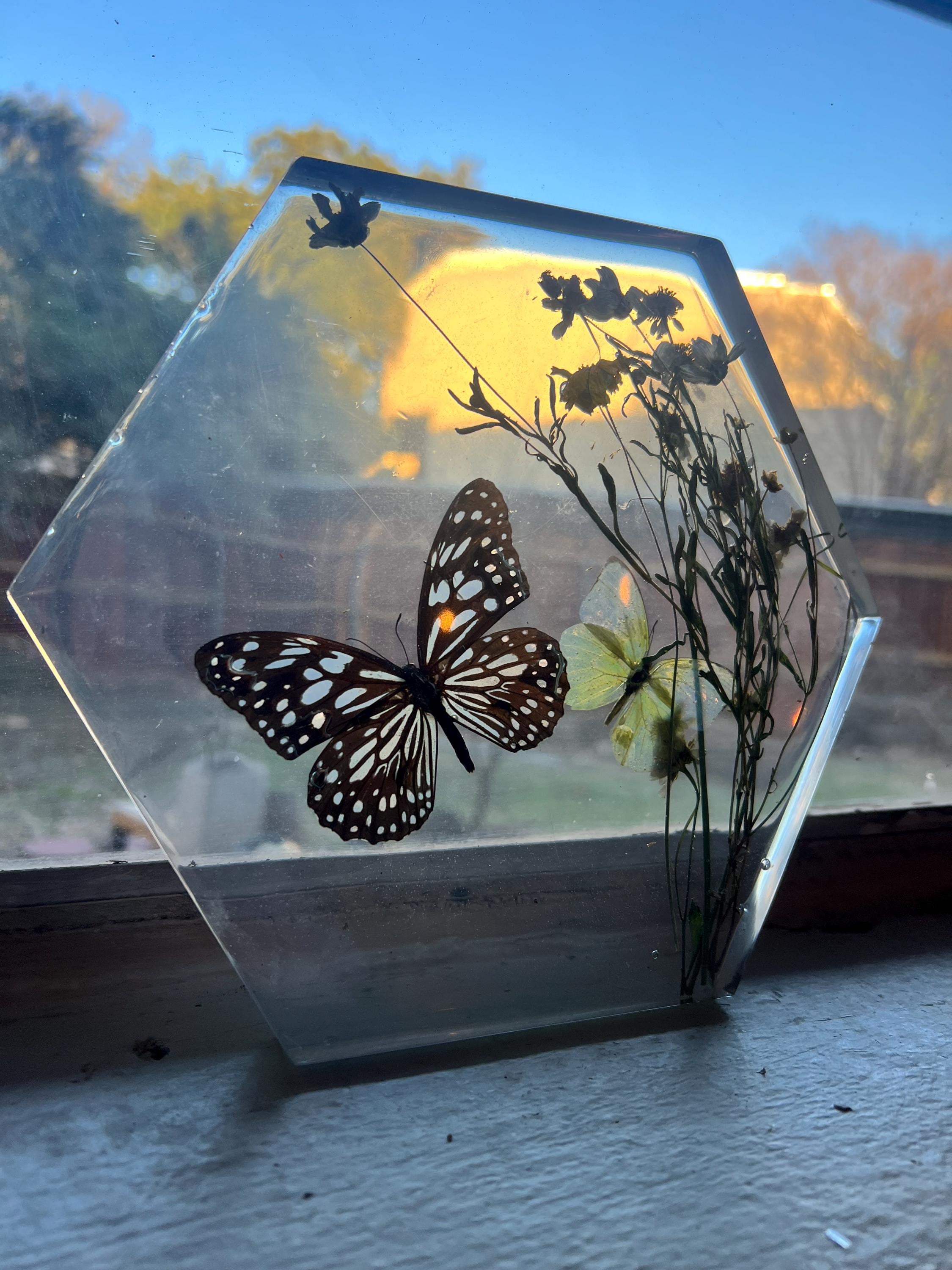
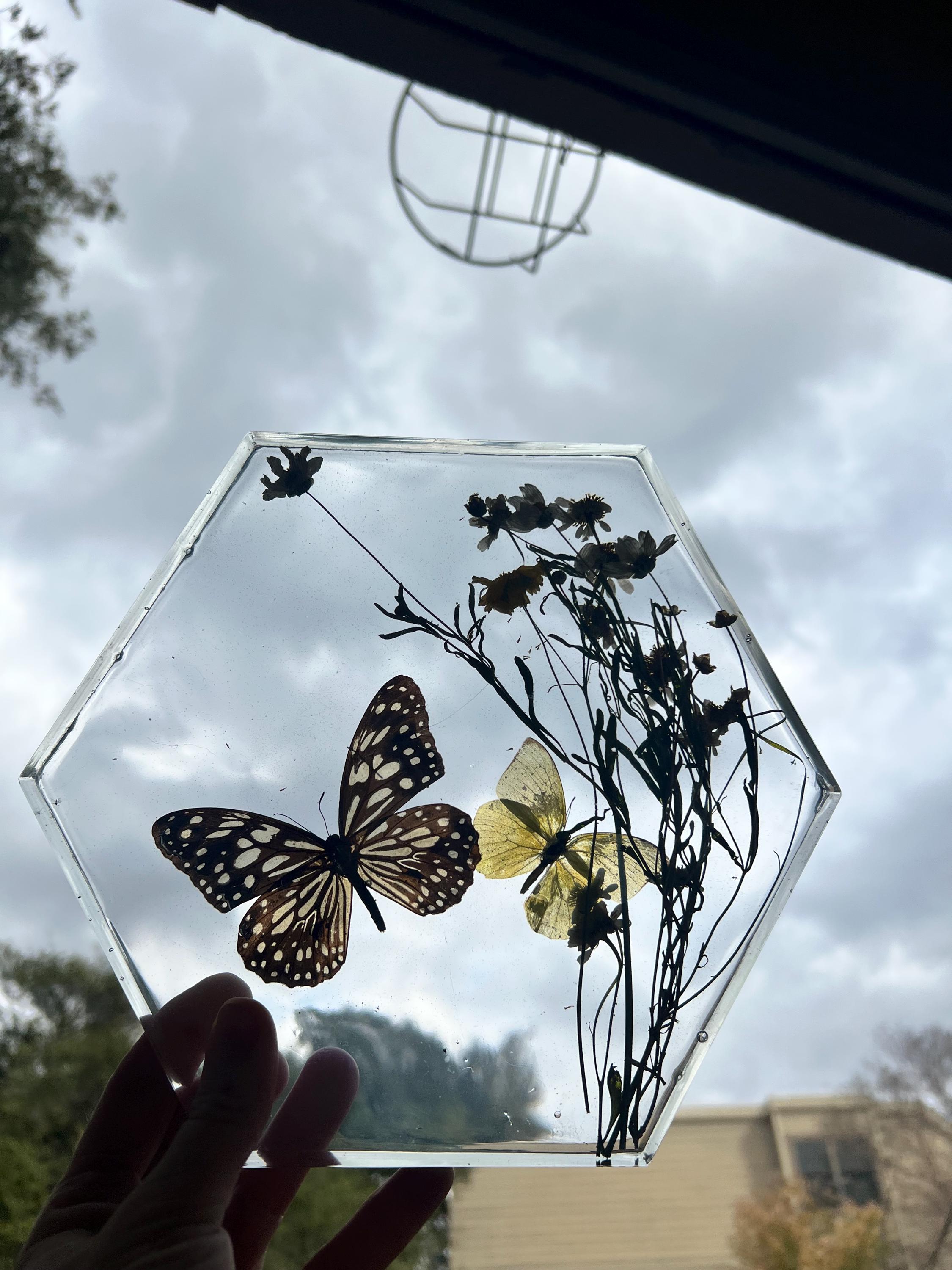
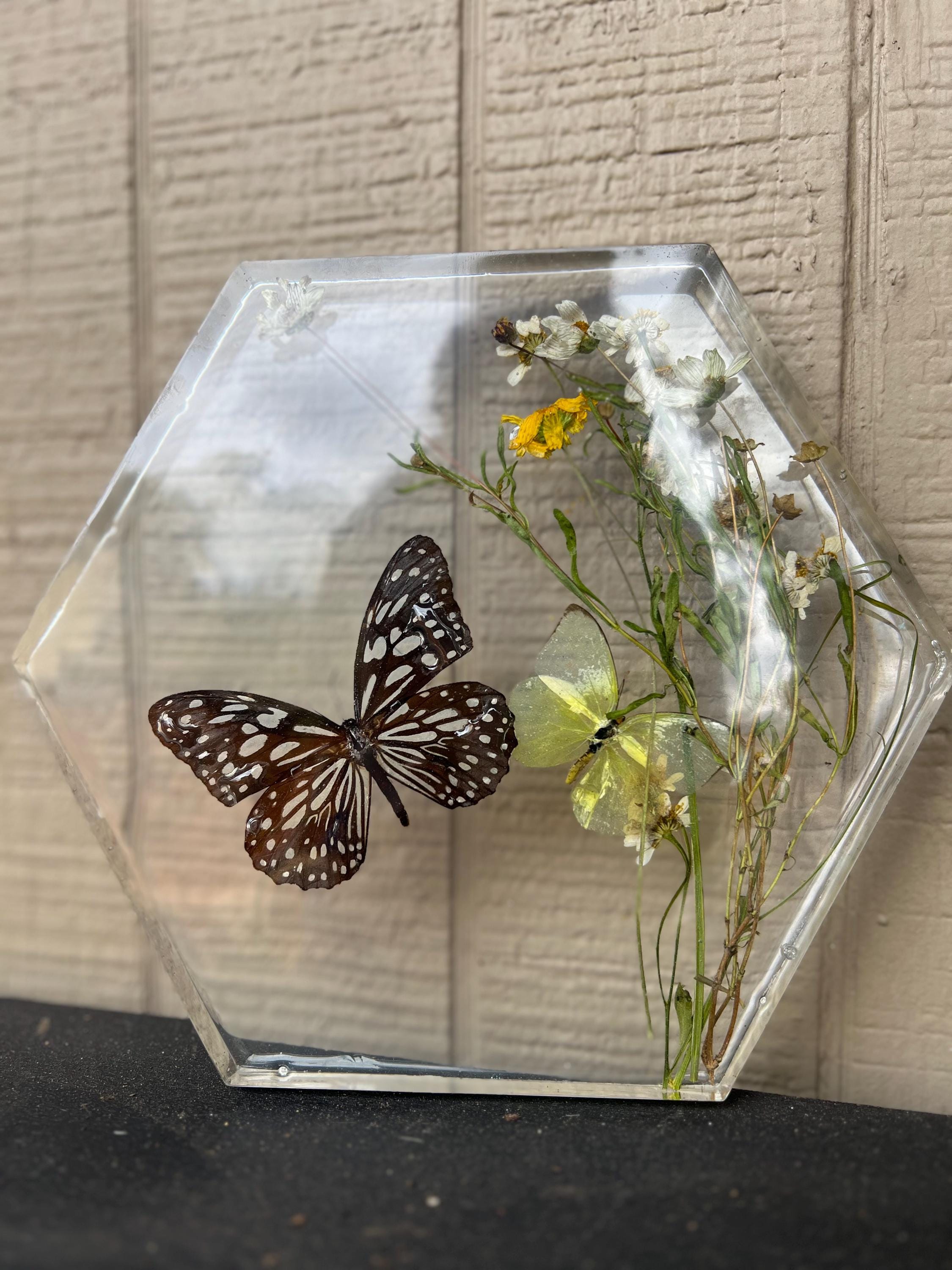
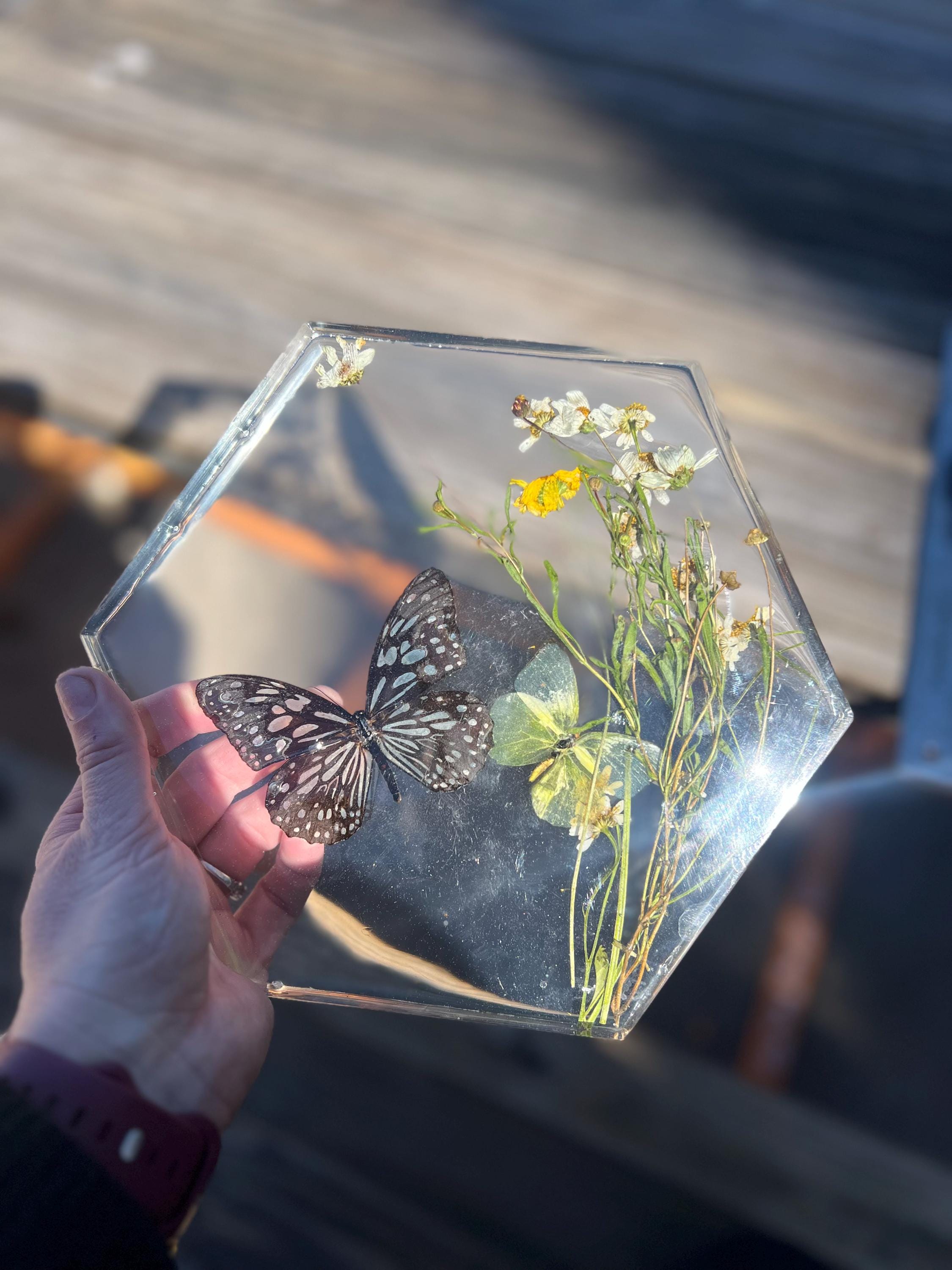
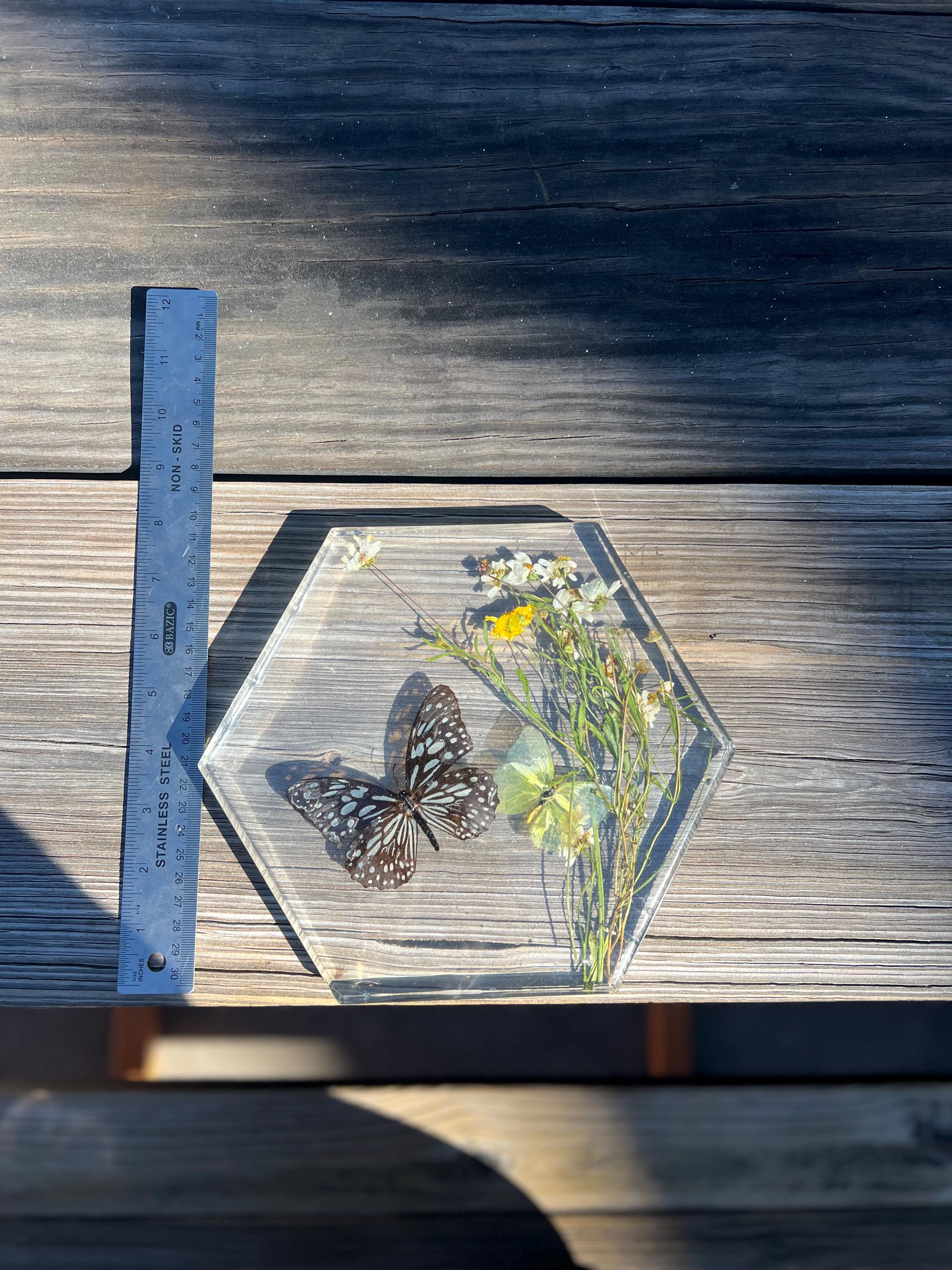
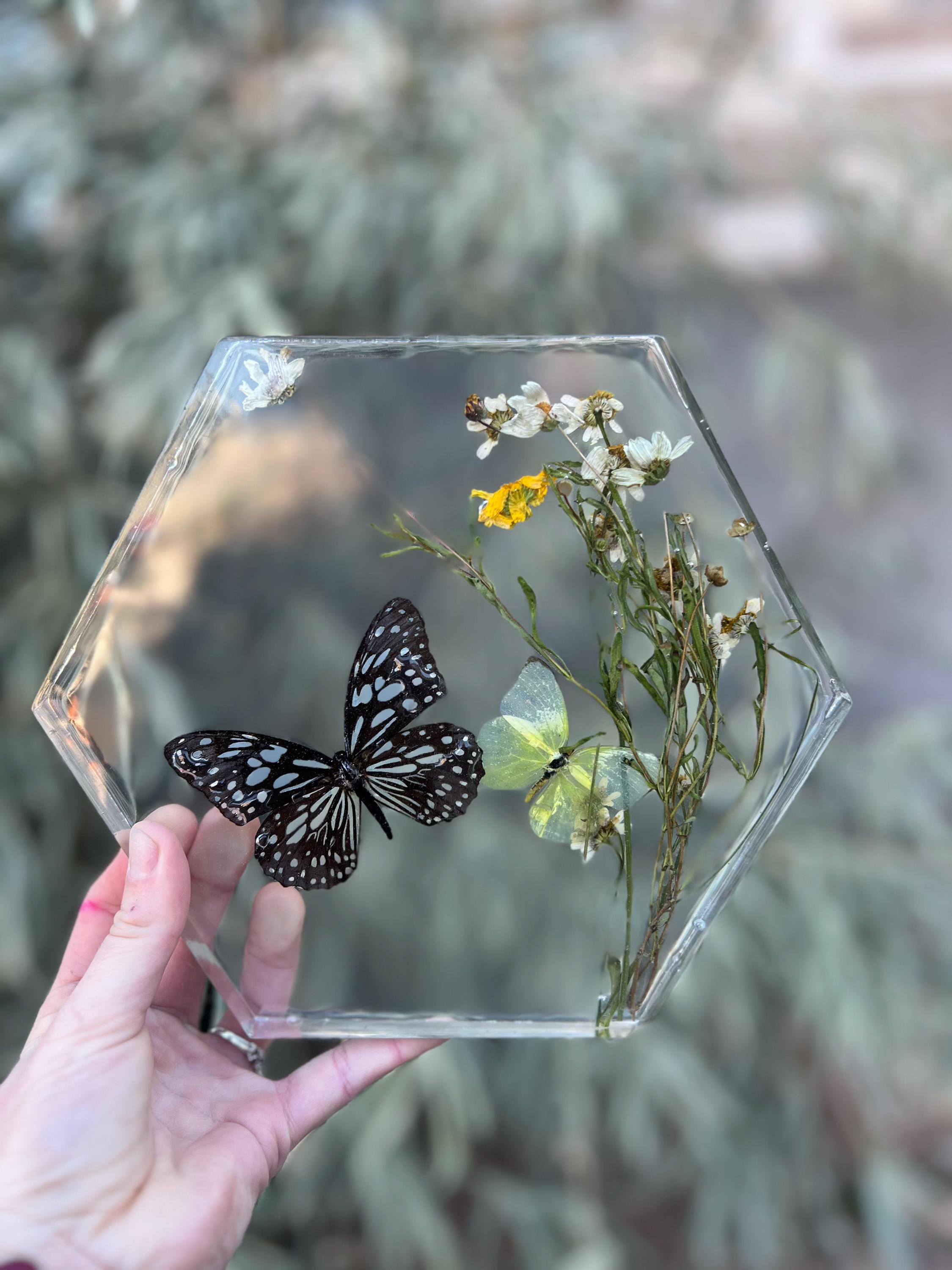
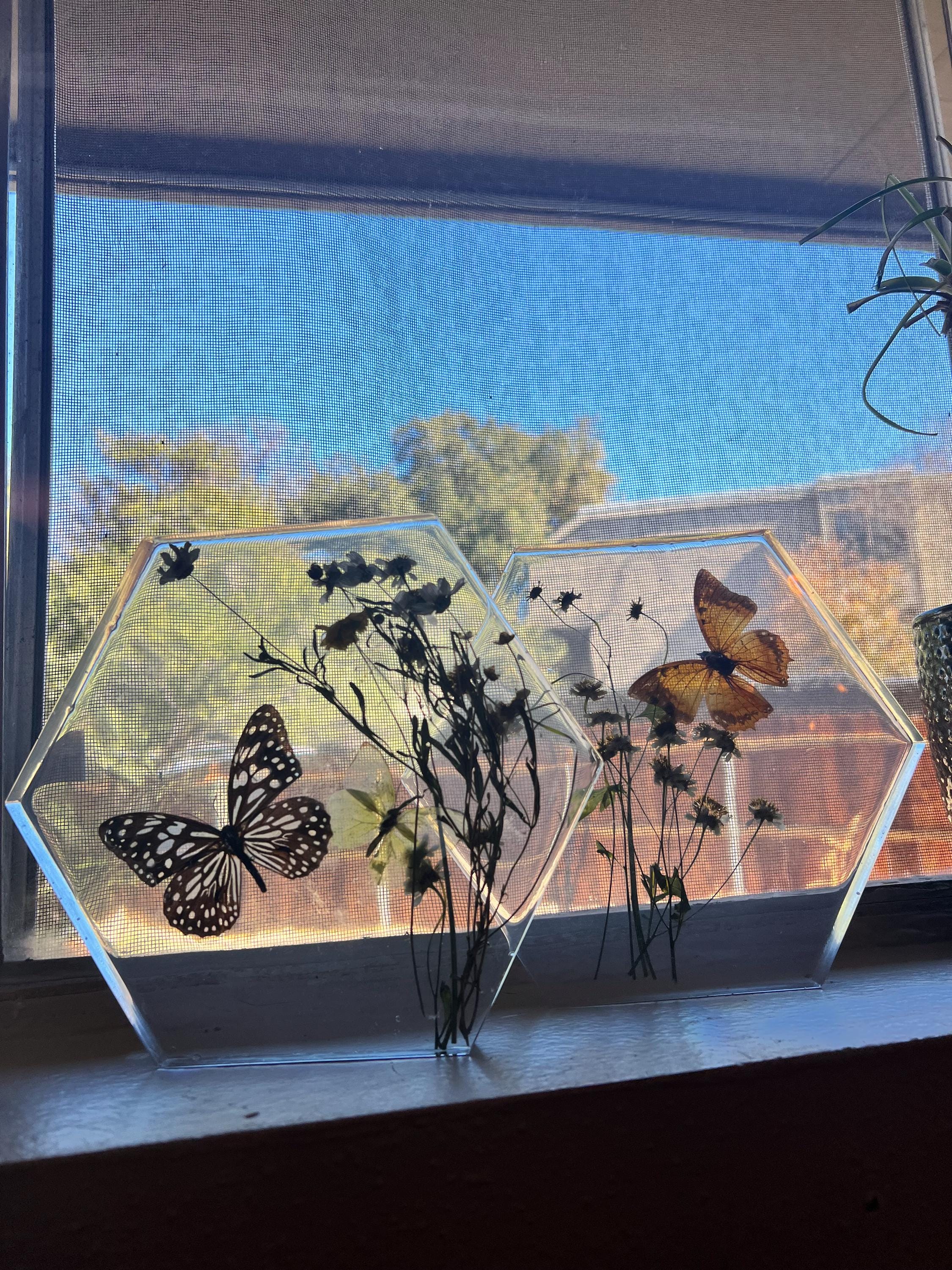
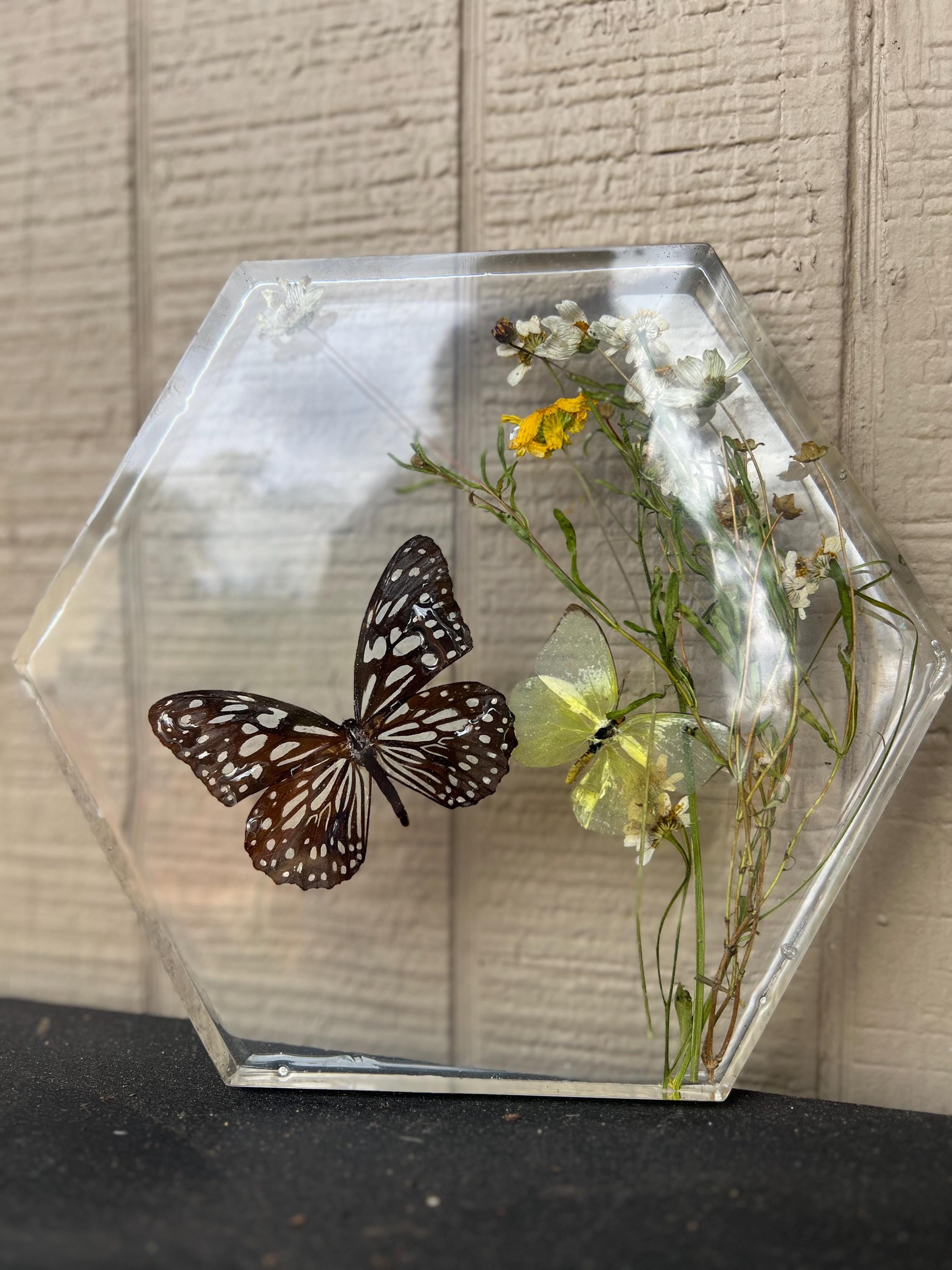
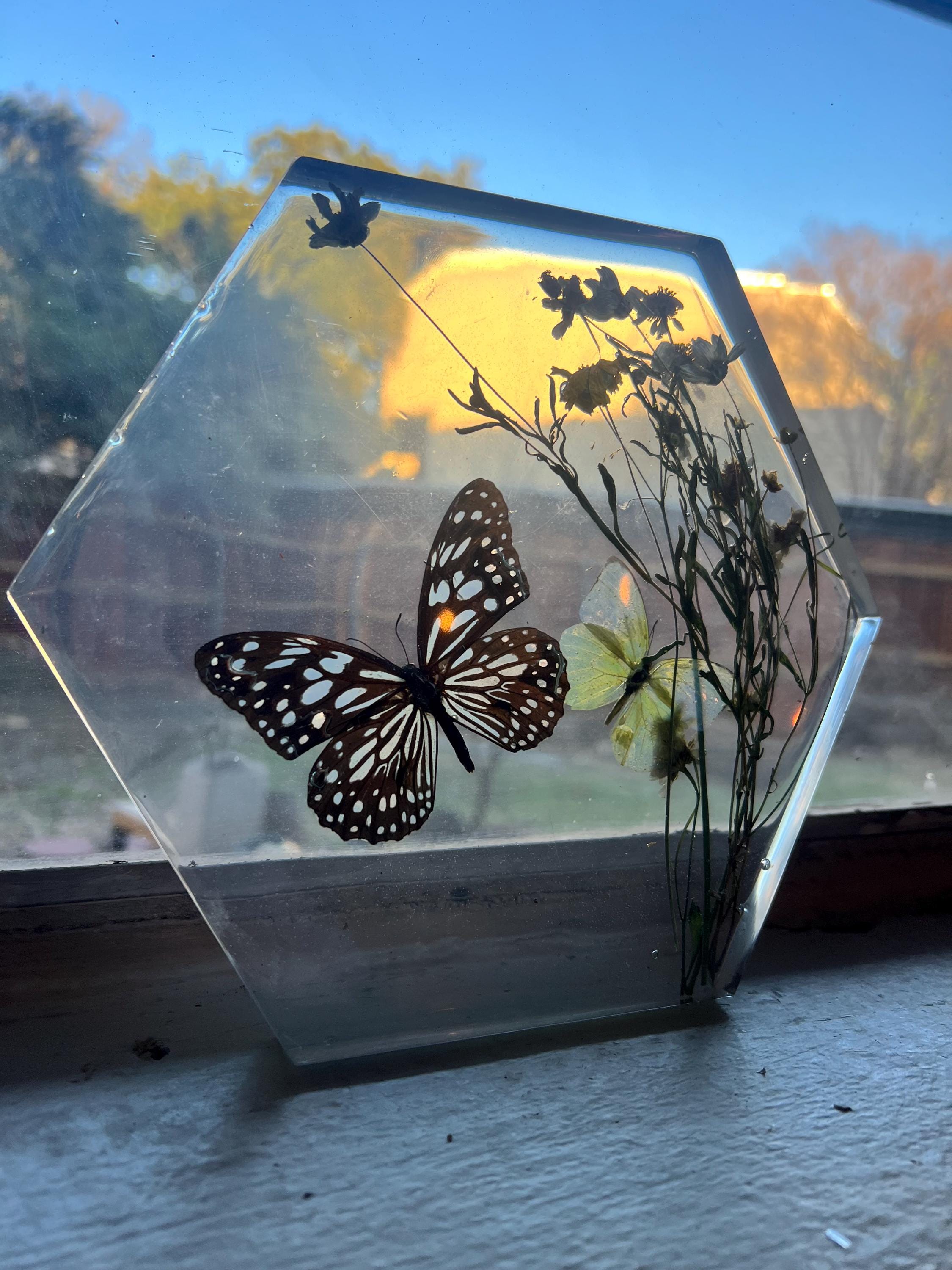
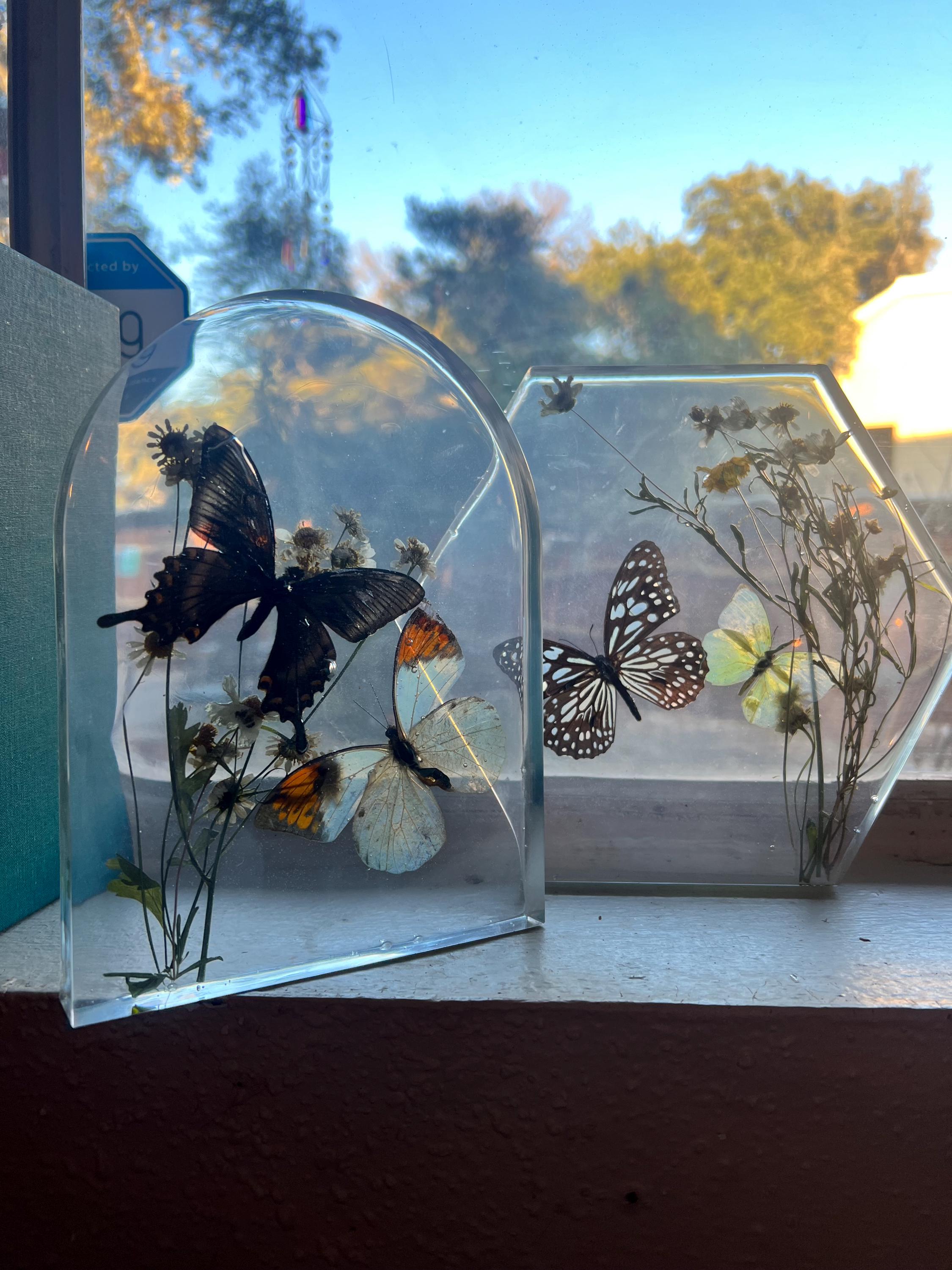
the blue tiger and the statira sulphur (two preserved butterflies) hand-picked chamomile botanicals, one large hexagon window display (dd_2)
$124.00
Butterfly Information:
The Blue Tiger (Tirumala limniace) is a striking migratory butterfly found in Asia, Australia, and Africa, featuring semi-transparent bluish-white spots and lines on dark brown-black wings. Belonging to the Nymphalidae family, this species has a 90–100 mm wingspan and is known for its slow, fluttering flight, often migrating in large numbers during monsoon seasons.
Key Characteristics and Habits:
Appearance: Upper side wings are black/dark brown with translucent, bluish-white markings; males have a small pheromone pouch (spot) on the hindwing.
Behavior: They are known for long-distance migrations during monsoons (notably in India) and often travel in large numbers. They are, however, relatively short-lived compared to some species, with a life span of around 14 days, though some sources suggest variations depending on the region.
Habitats: Common in tropical forests, gardens, and open, dry-zone vegetation.
Flight: They have a slow, fluttering flight.
Host Plants: Caterpillars feed on milkweed plants (Asclepias, Calotropis) and vines, making the butterflies poisonous to predators.
Mimicry: Due to their toxicity, other butterfly species often mimic the Blue Tiger for protection.
Similar Species:
Dark Blue Tiger (Tirumala septentrionis): Closely resembles the Blue Tiger but is darker with narrower, bluer markings.
Blue Wanderer (Tirumala hamata): Found in Australia, often confused with the Blue Tiger.
The Blue Tiger is a common, yet strikingly beautiful, part of tropical ecosystems, particularly noted for its abundance and, in some regions, its massive, visible migrations.
Butterfly Information #2:
The Statira Sulphur (Aphrissa statira) is a fast-flying, migratory butterfly found from South America to Florida. Known for huge, active migrations, these vibrant yellow butterflies, which are often confused with Cloudless Sulphurs, fly in large groups along rivers and over the ocean. Their caterpillars, which thrive on pea family plants, have a remarkable, sleek, and pale blue-green to gray chrysalis.
Fascinating Facts about Aphrissa statira:
Migratory Behavior: They are strongly migratory, flying upriver in the dry season and downriver toward the sea in the wet season to colonize new areas.
Mass Group Activity: During migrations, they travel in large groups, often seen as a "river" of yellow, and they occasionally fly over the open ocean to inhabit islands like the Antilles.
"Sipping" Habits: Males frequently gather in large, packed groups of up to 100 on moist, sandy riverbanks to sip water, often intermingling with other species.
Distinctive Chrysalis: Unlike many bumpy chrysalids, theirs is smooth and pale blue-green to grayish, often adorned with a thin reddish line along the back and a yellow stripe.
Sexual Dimorphism: Males are a vibrant, lemon-yellow, while females are more pale and vary in color, often featuring a white or pale green undersides with black tips on the upper wings.
Fast & High Flight: Adults are known for their quick, direct flight, commonly found feeding on red-flowered plants like Lantana and congregating on tree tops during the hottest parts of the day.
Host Plant Versatility: Caterpillars eat plants in the pea family (Fabaceae), particularly Dalbergia ecastophyllum (Coin Vine) and Calliandra.
Rapid Life Cycle: In Florida, they can be found flying year-round, representing multiple, successive generations.
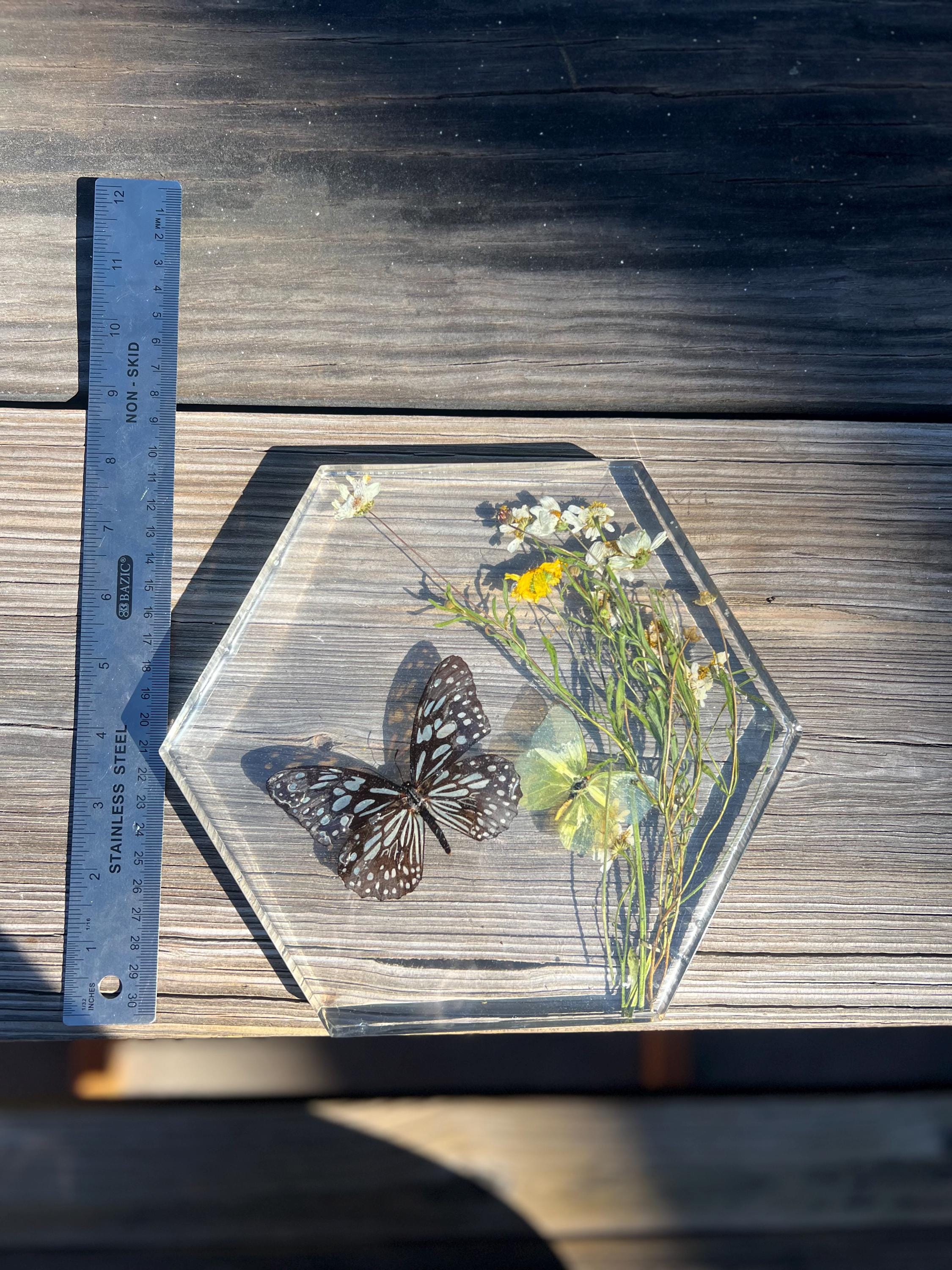
Hexagon Product Dimensions:
8" tall, 9" wide. Hexagon shaped, each side 4.5 inches. 6 sides total.
This handcrafted hexagonal resin sculpture captures a beautiful natural contrast between two real butterflies, information above. Gently arranged among hand-picked and pressed chamomile wildflowers, these specimens embody harmony and transformation, preserved forever in crystal-clear resin.
Each piece is handmade with care, featuring ethically sourced butterflies and natural botanicals suspended in museum-quality, UV-resistant resin. The unique composition and elegant hexagonal shape make it an eye-catching decorative piece and a meaningful gift.
Product Highlights
Real butterfly specimens, ethically and sustainably sourced
Species: Common Crow (Euploea core) and Grass Yellow (Eurema hecabe)
Dried wildflowers arranged to complement each butterfly’s natural color
UV-resistant epoxy resin for long-lasting clarity and protection
Hand-poured and polished to a flawless, glass-like finish
Hexagonal form adds a contemporary, geometric touch
Each piece is completely unique and one of a kind
The Process
Every specimen is carefully prepared, dried, and positioned alongside natural hand-picked chamomile before being cast in clear casting resin. The resin is poured and cured in stages to eliminate bubbles and preserve even the most delicate details. Once hardened, the piece is sanded and hand-polished to achieve a crystal-clear, smooth surface.
Ideal For:
Nature and butterfly admirers
Contemporary botanical art collectors
Home, office, or studio decoration
Thoughtful and lasting gifts for birthdays, anniversaries, or memorials
Sustainability
All butterflies are responsibly collected and never harmed for art. Specimens are either naturally expired or obtained from sustainable sources. The resin used is archival-grade and UV-resistant, ensuring clarity and longevity.
Each sculpture is a one-of-a-kind creation — a small piece of nature’s quiet beauty, captured in resin and light.