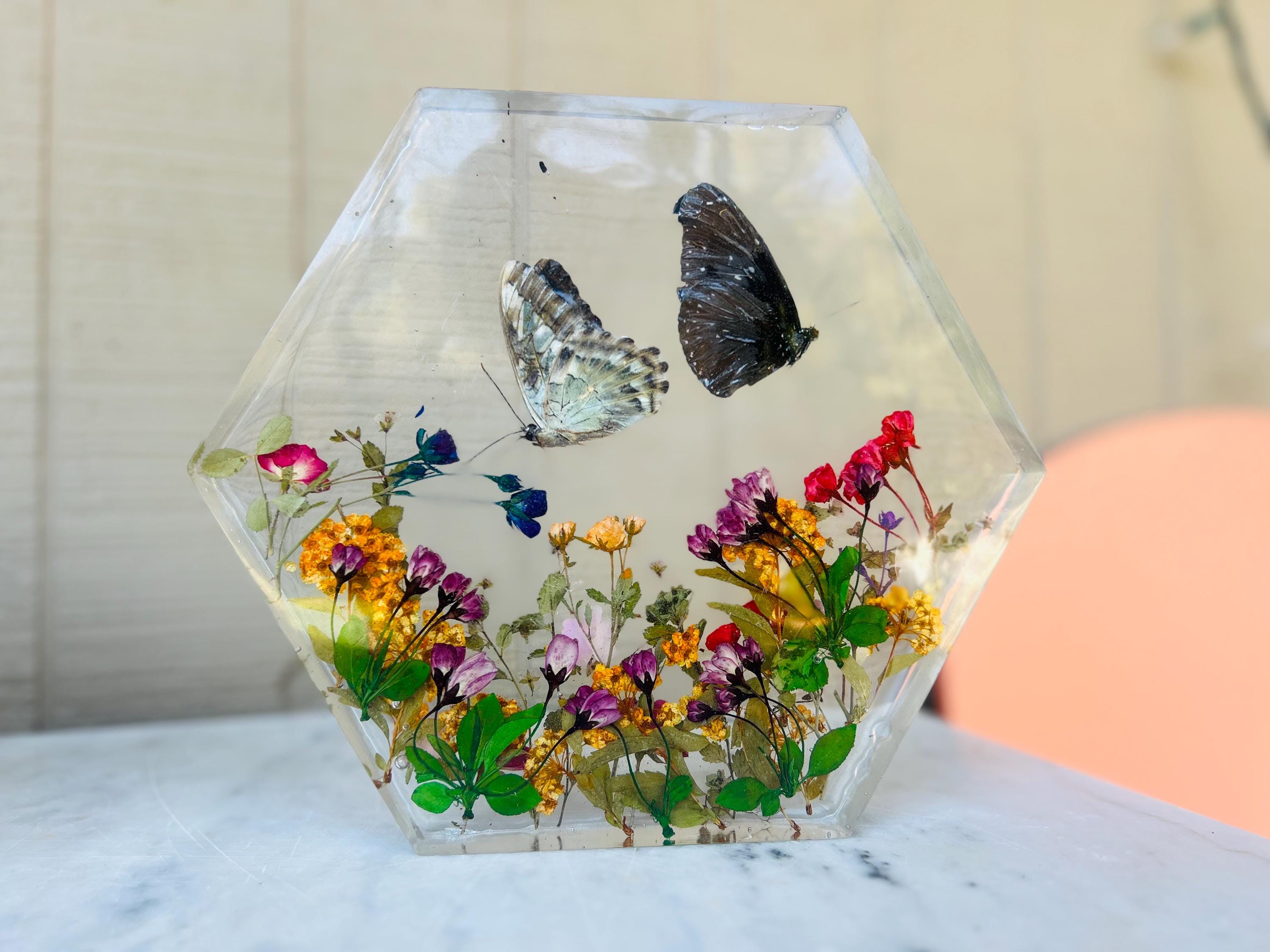
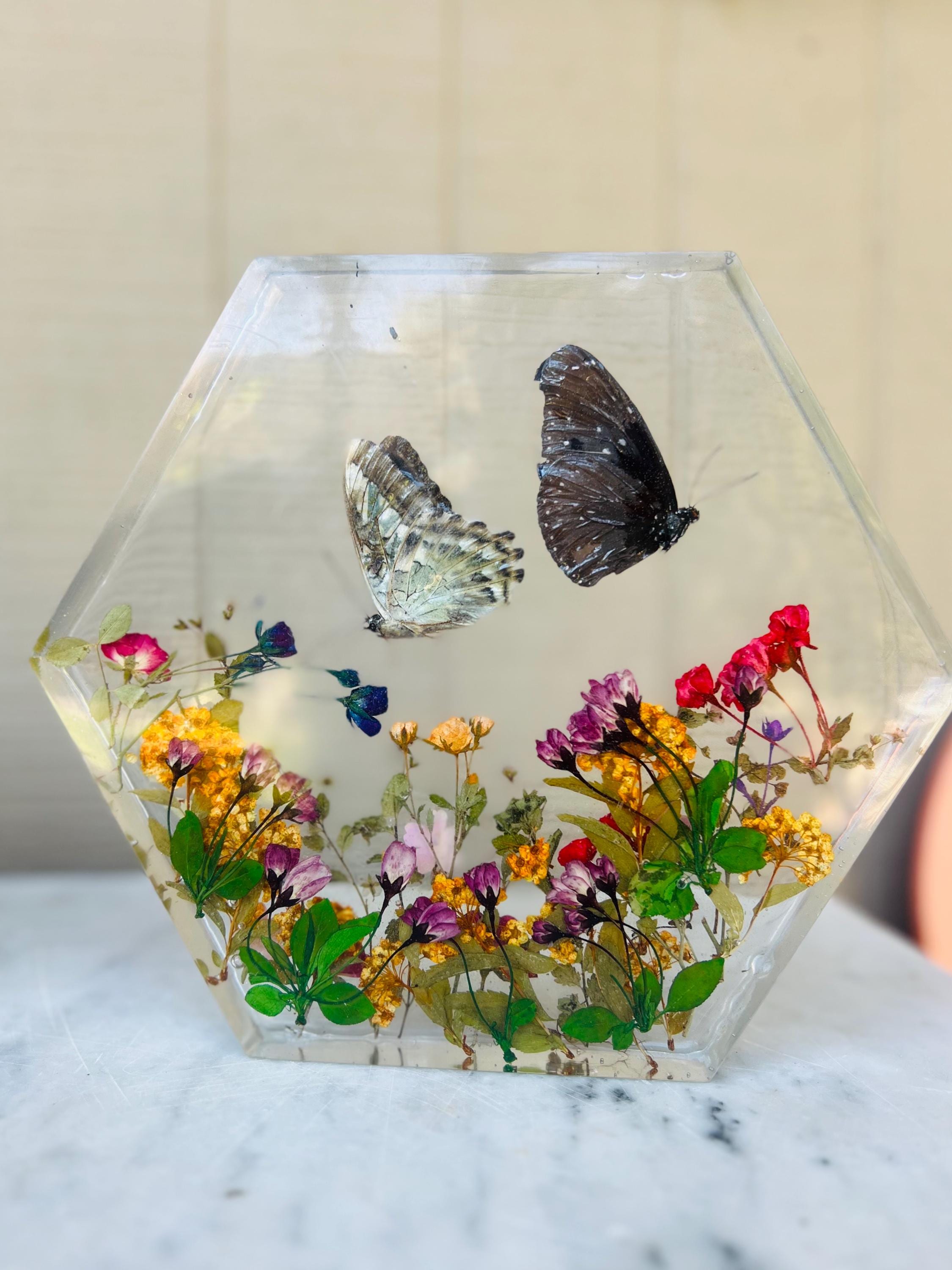
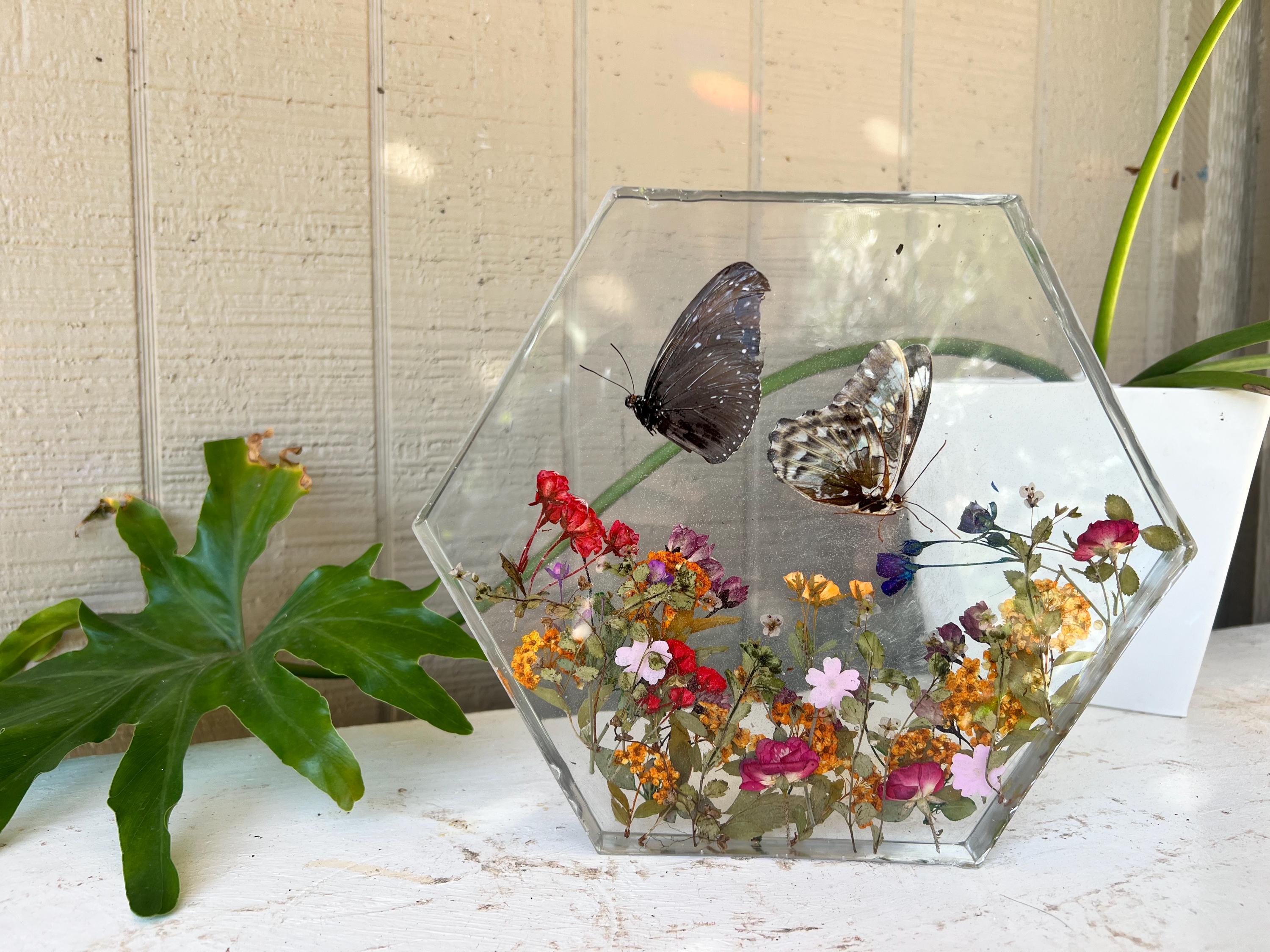
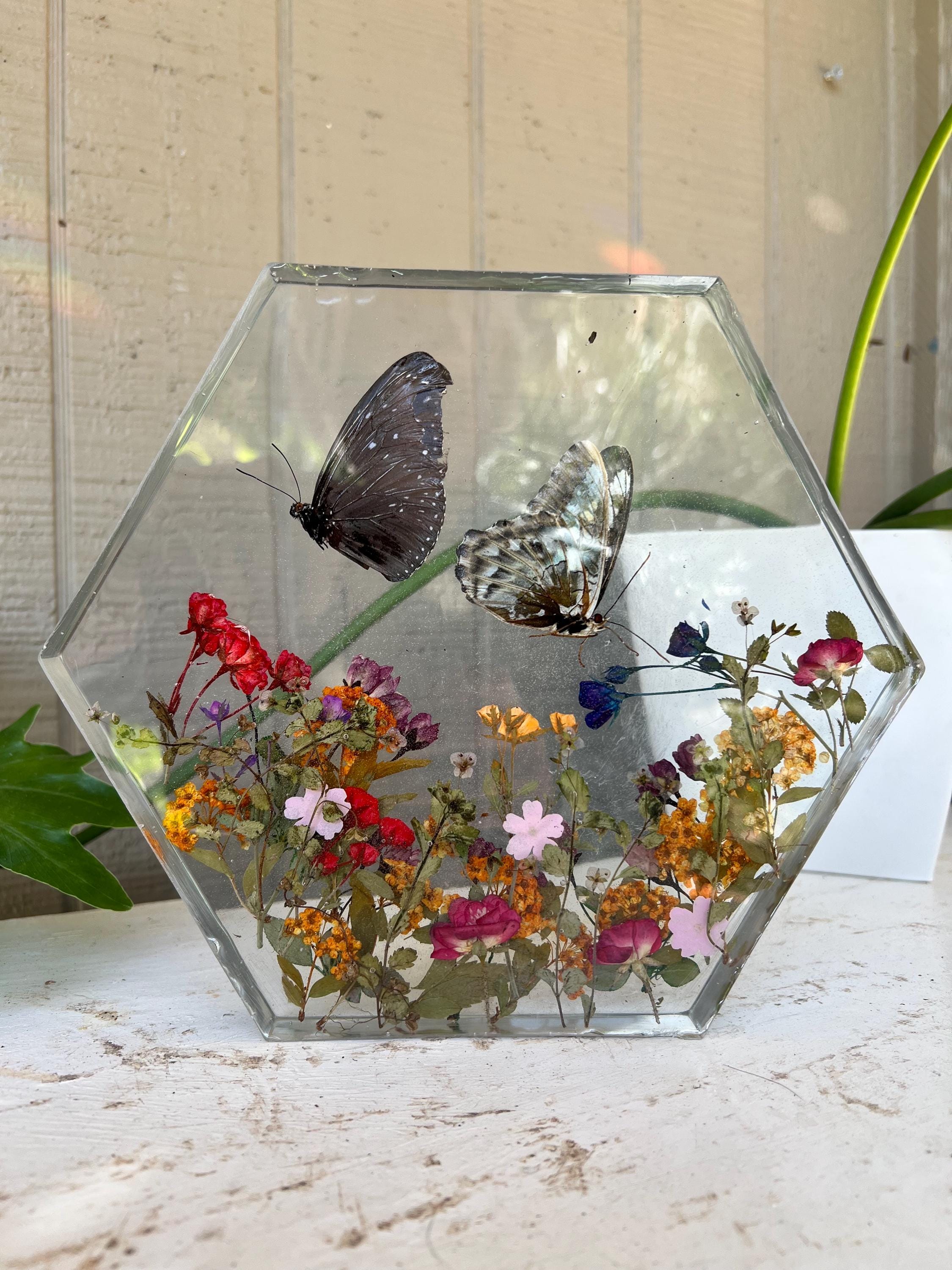
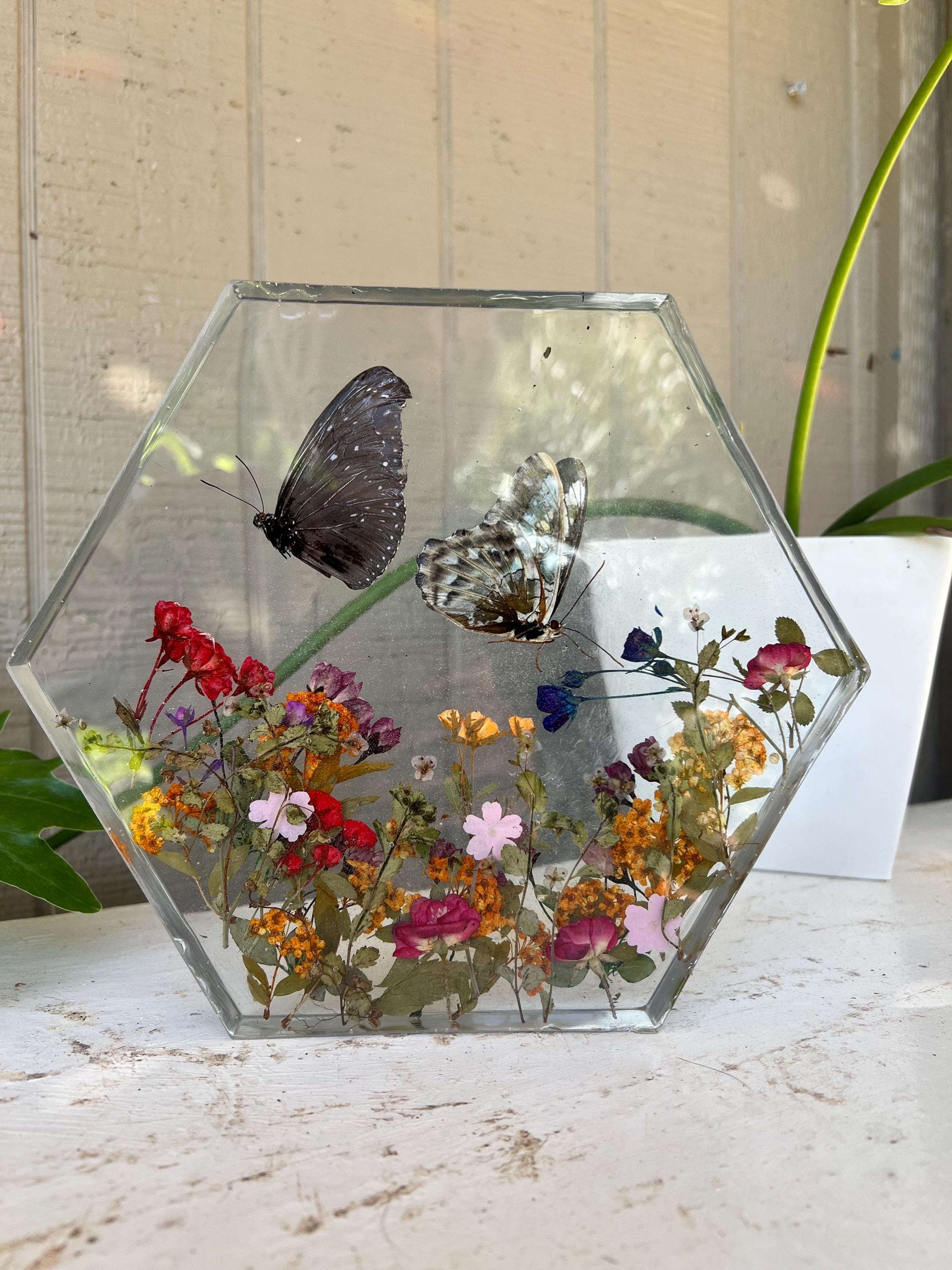
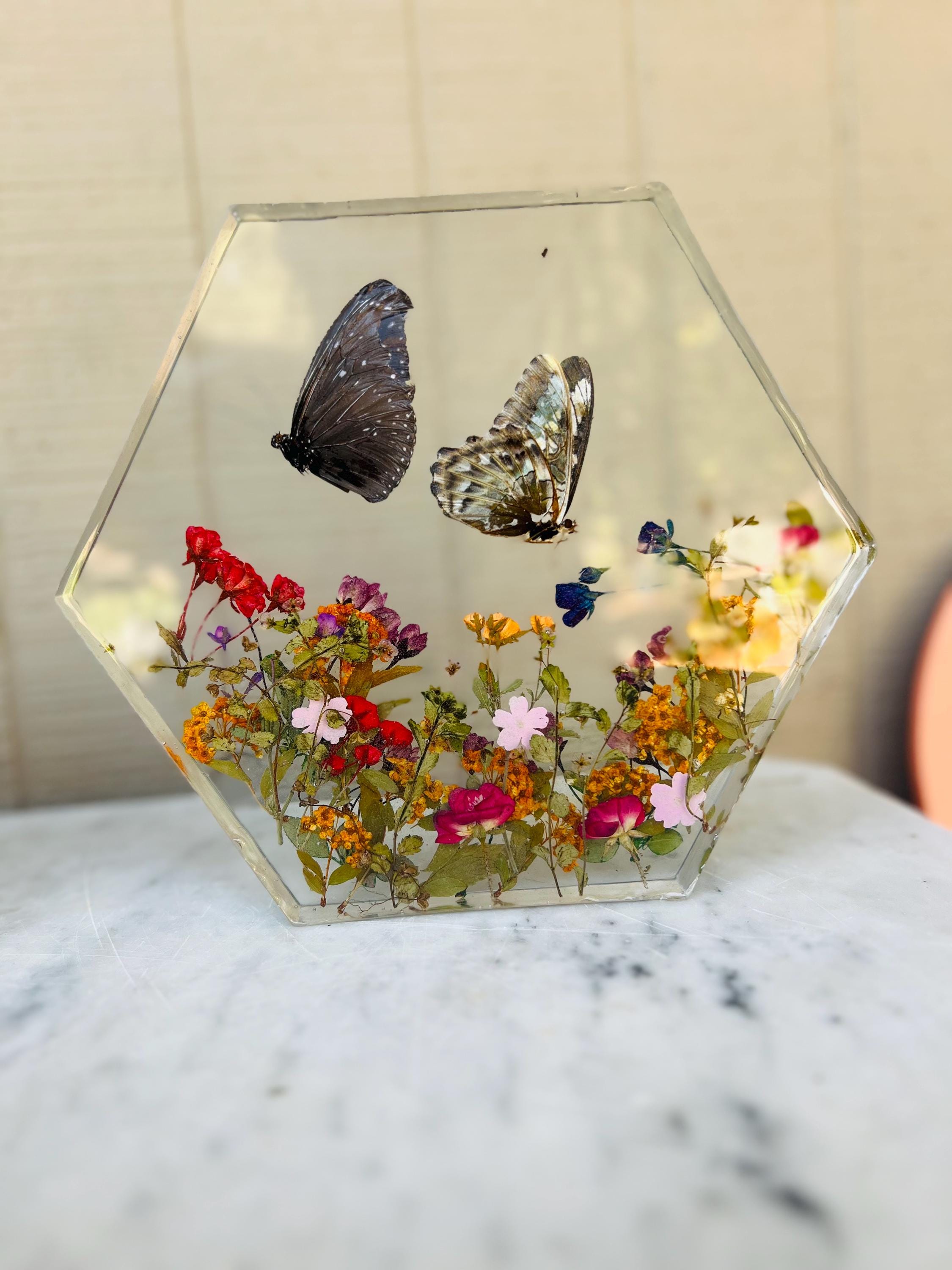
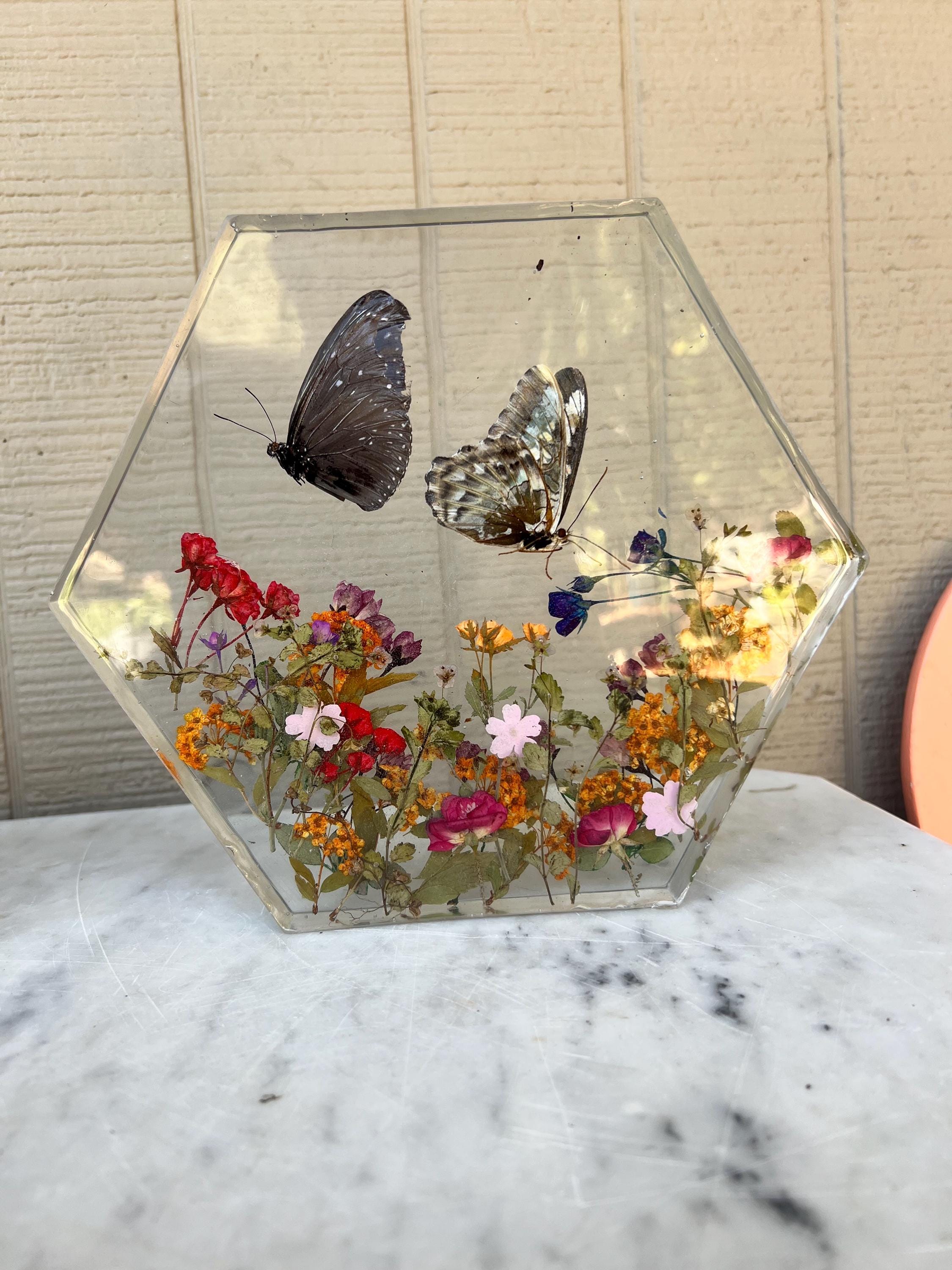
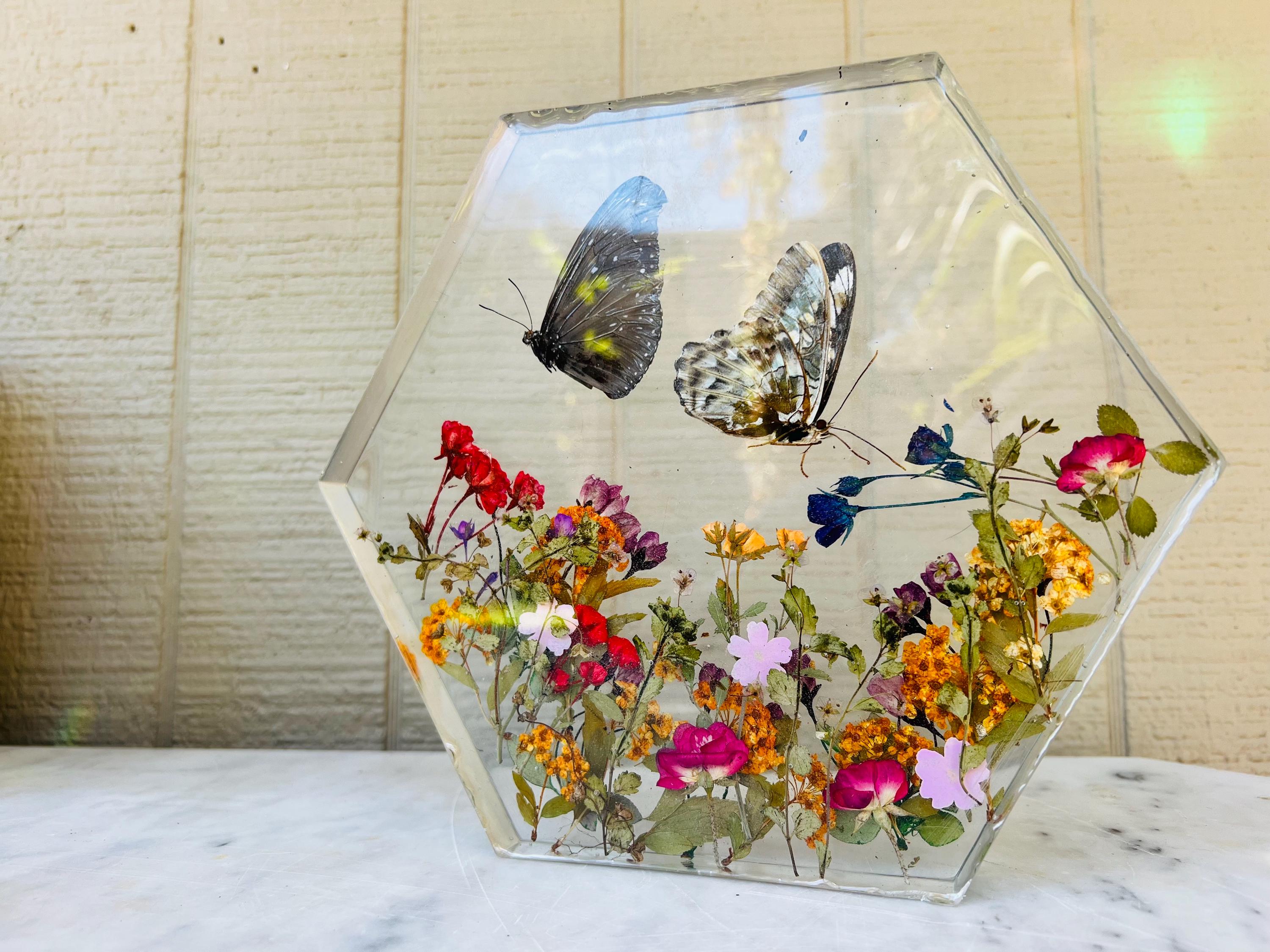
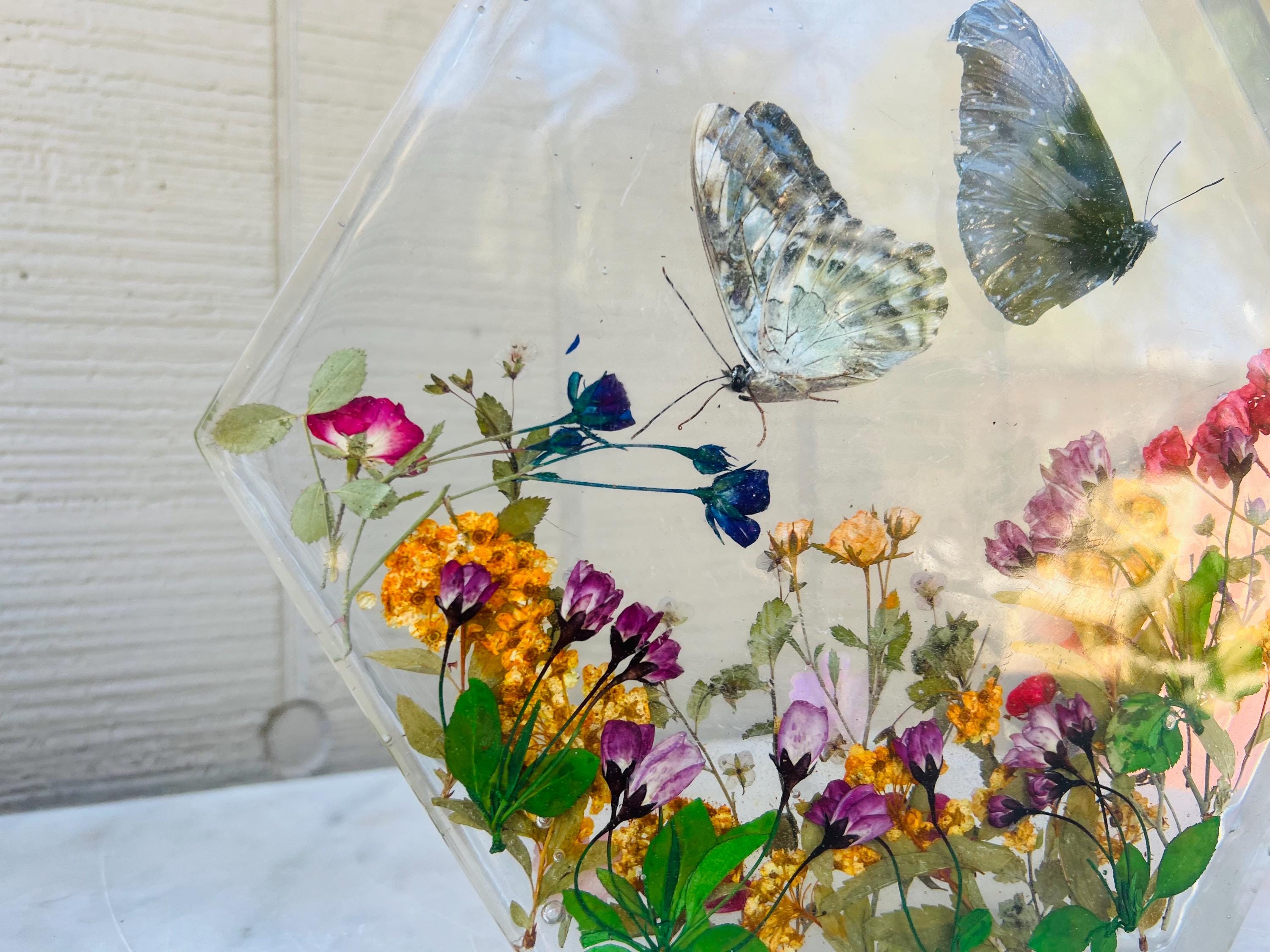
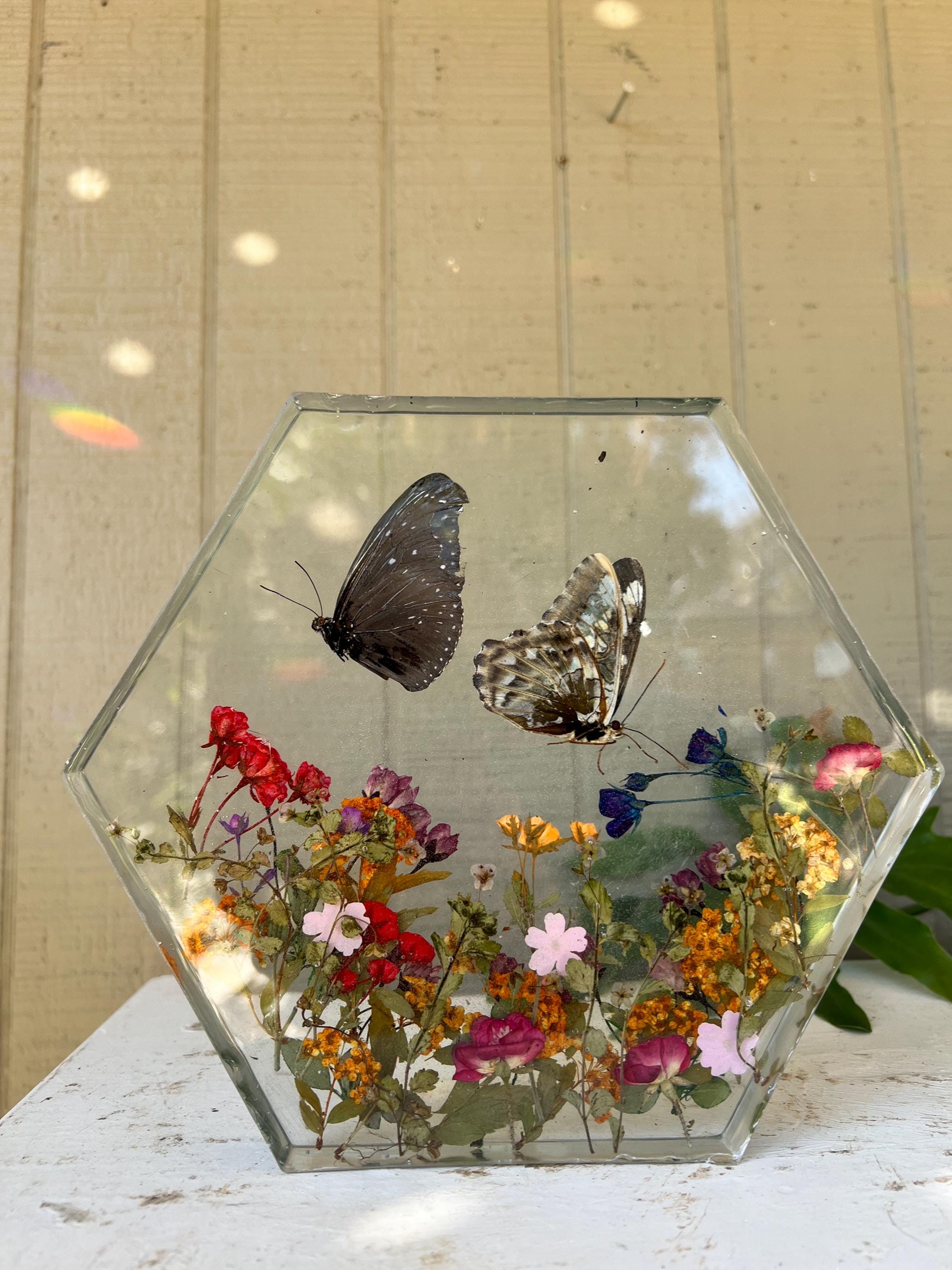
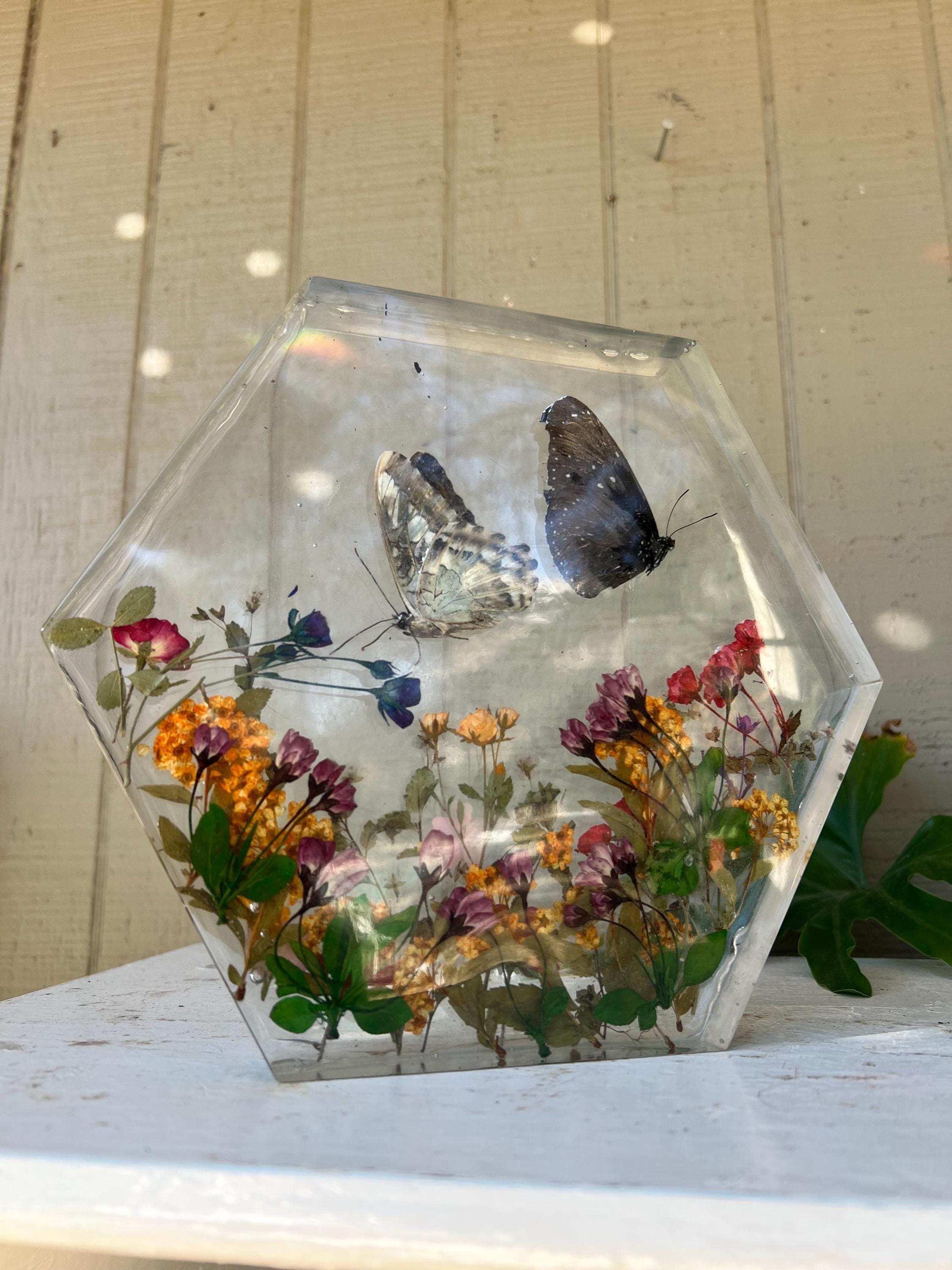
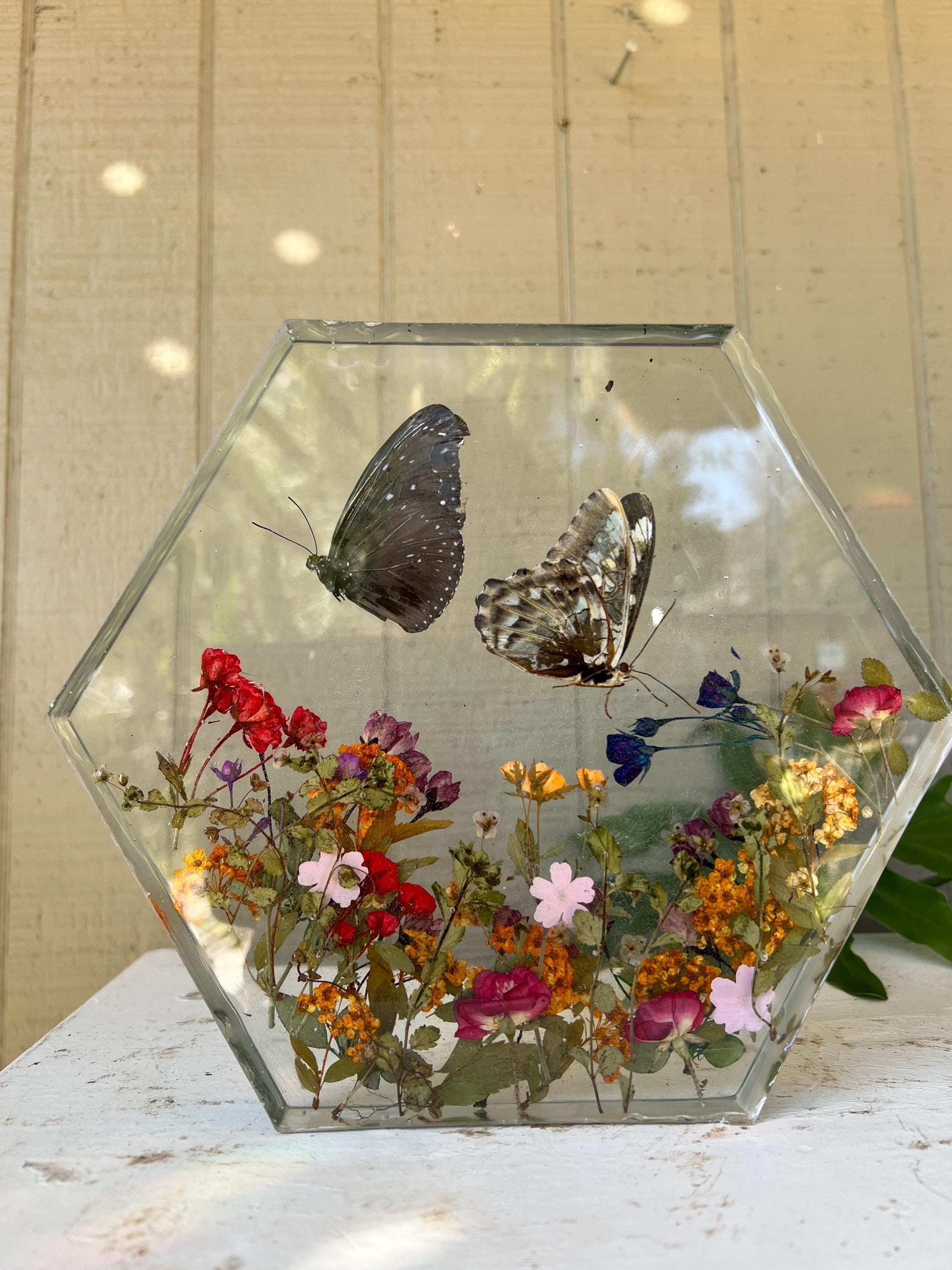
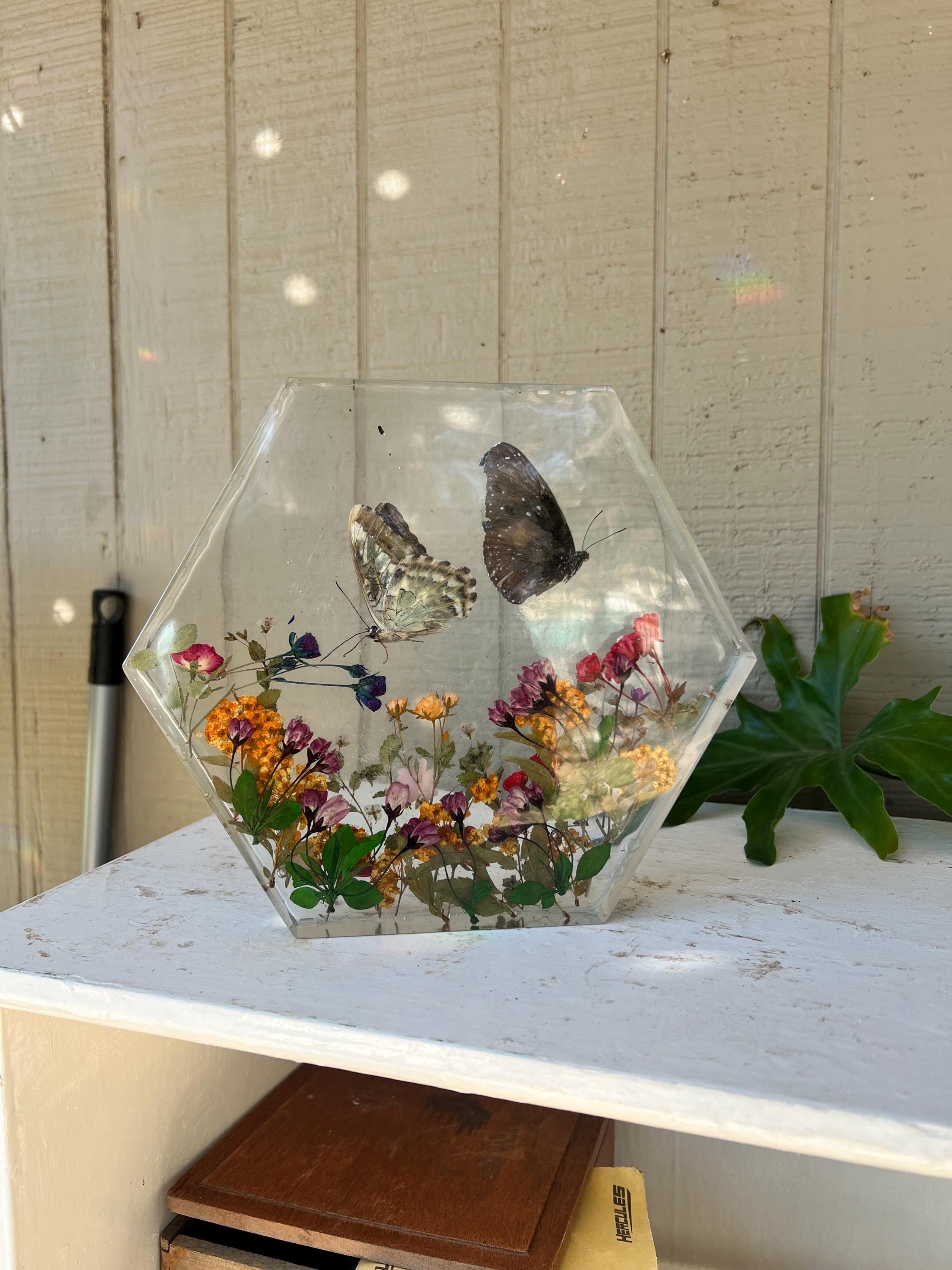
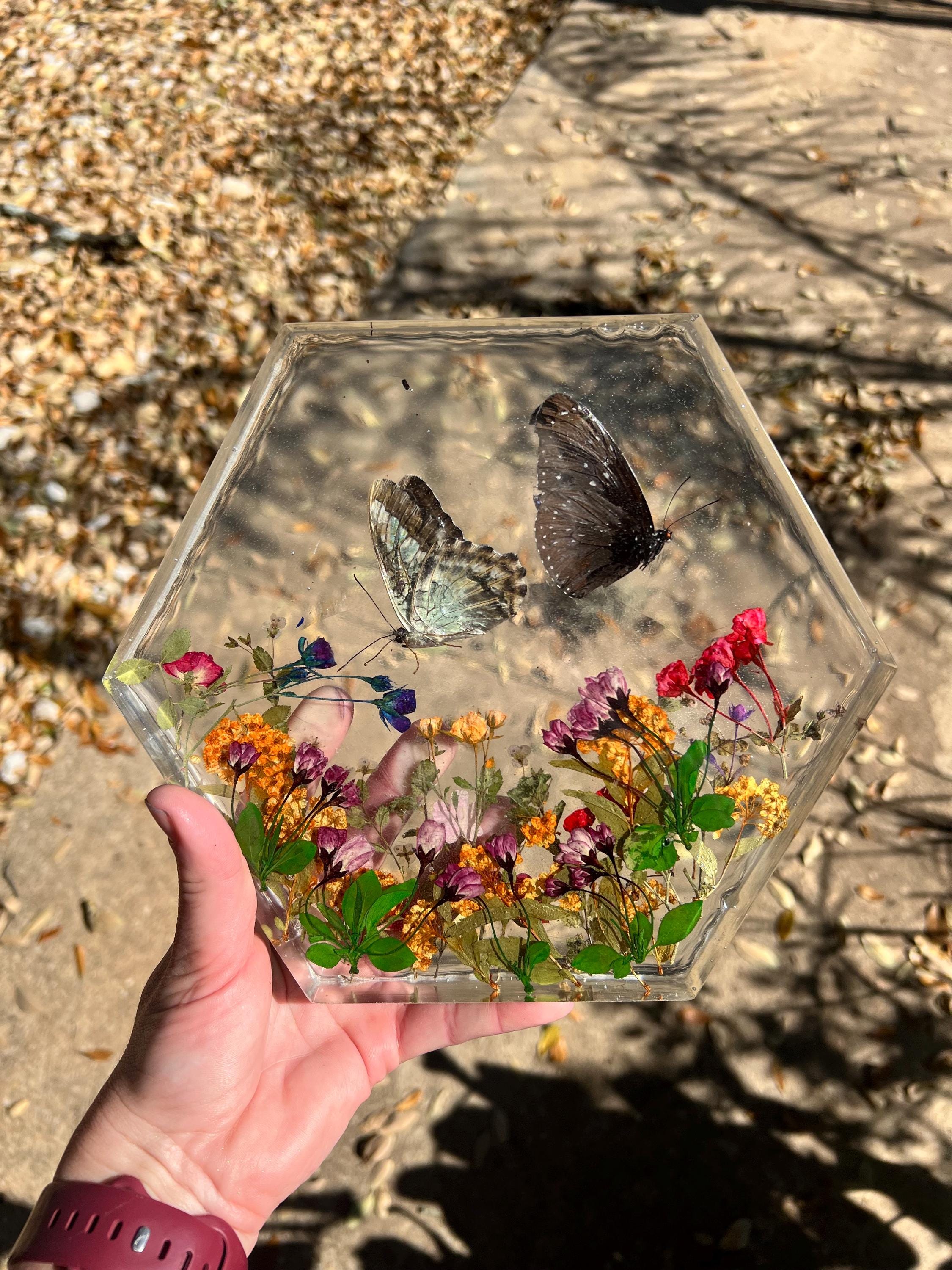
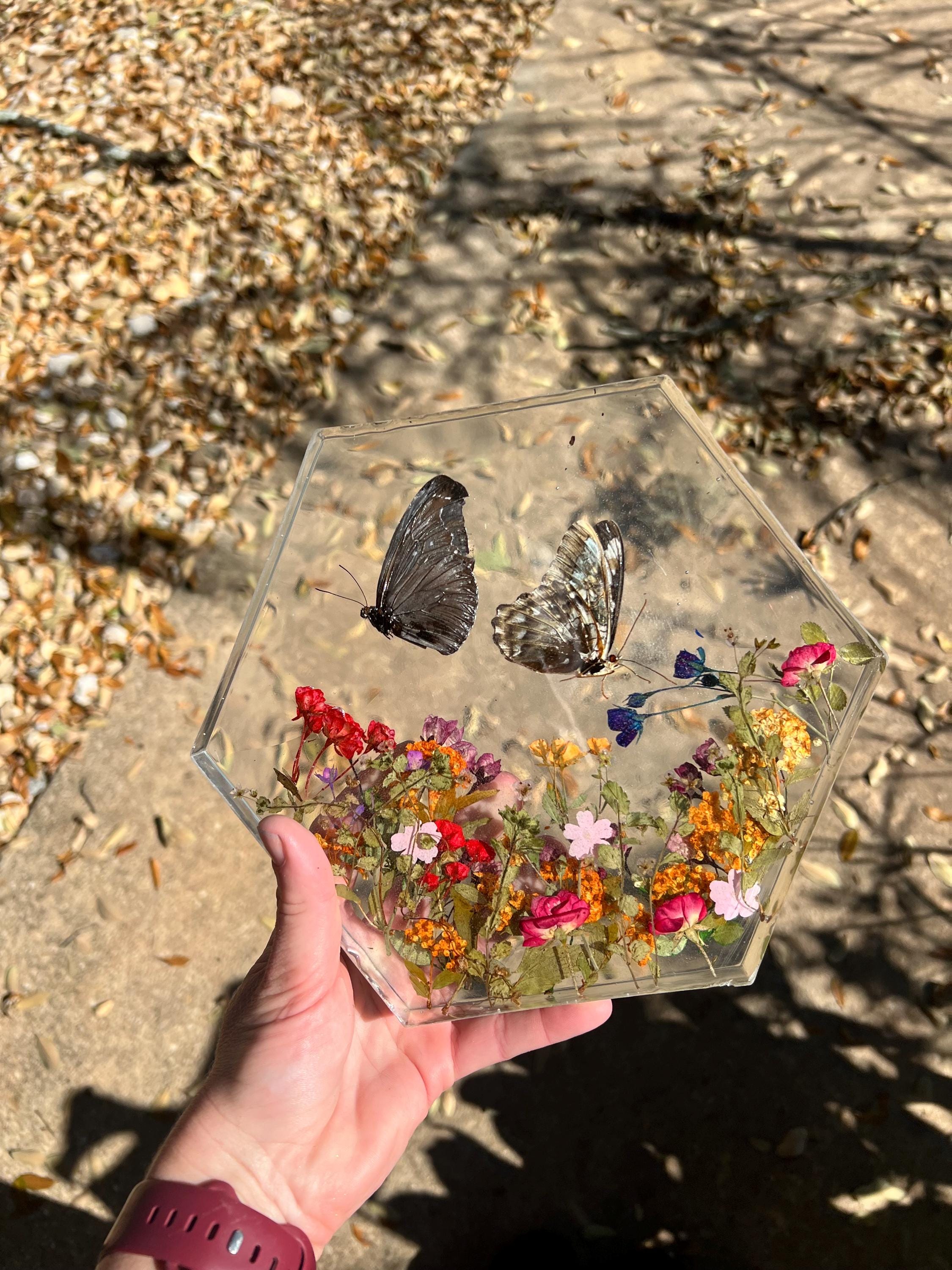
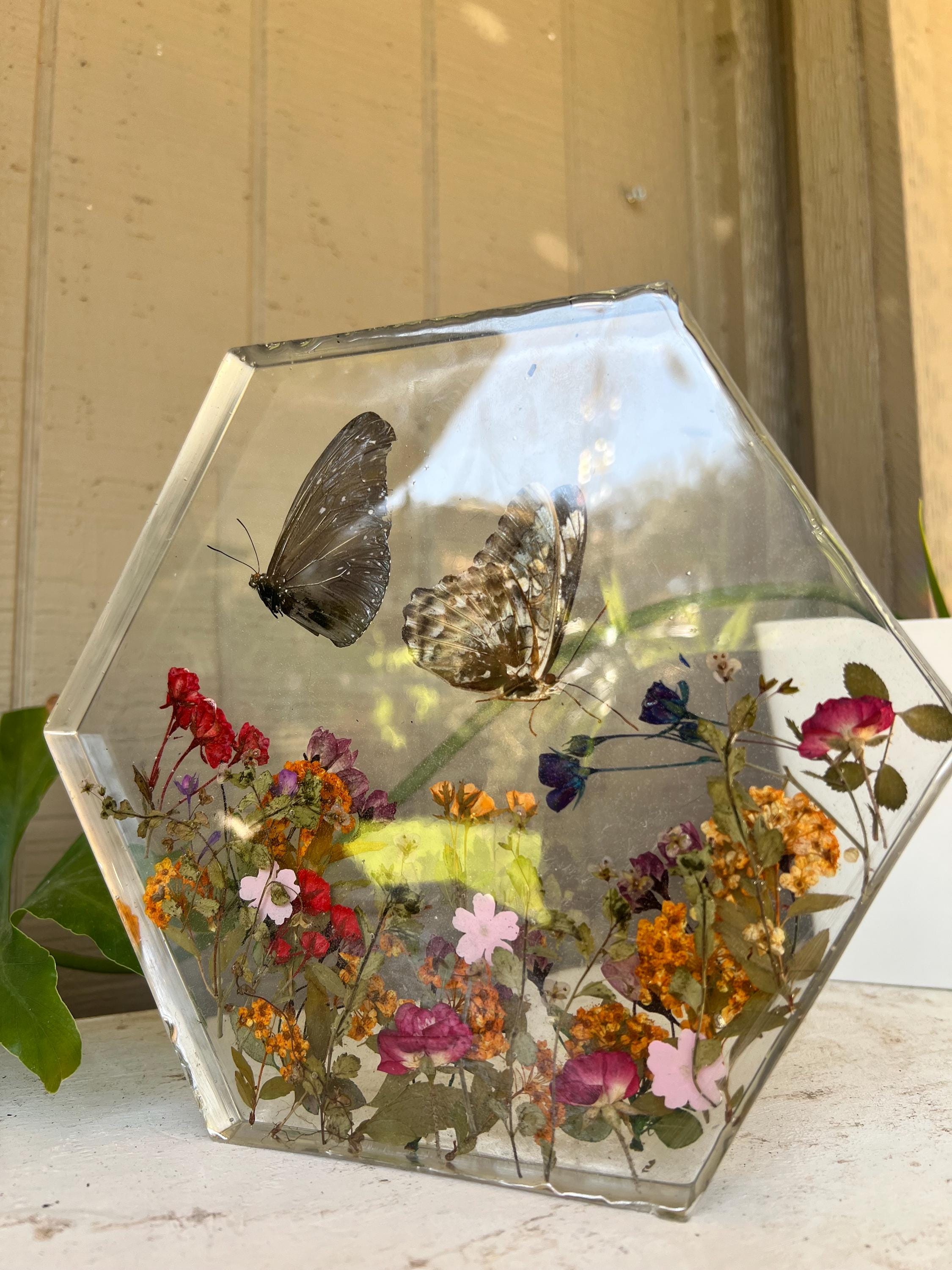
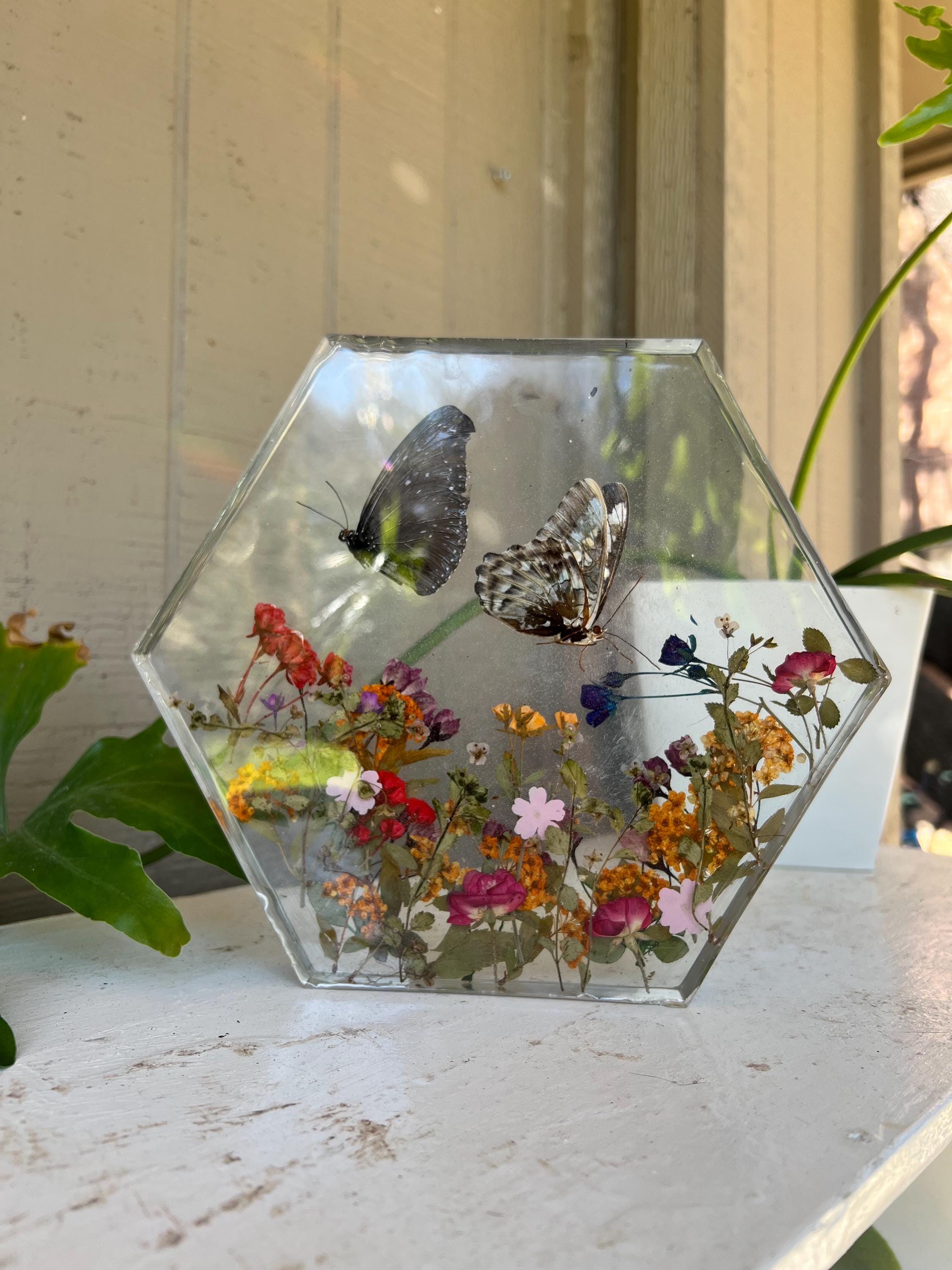
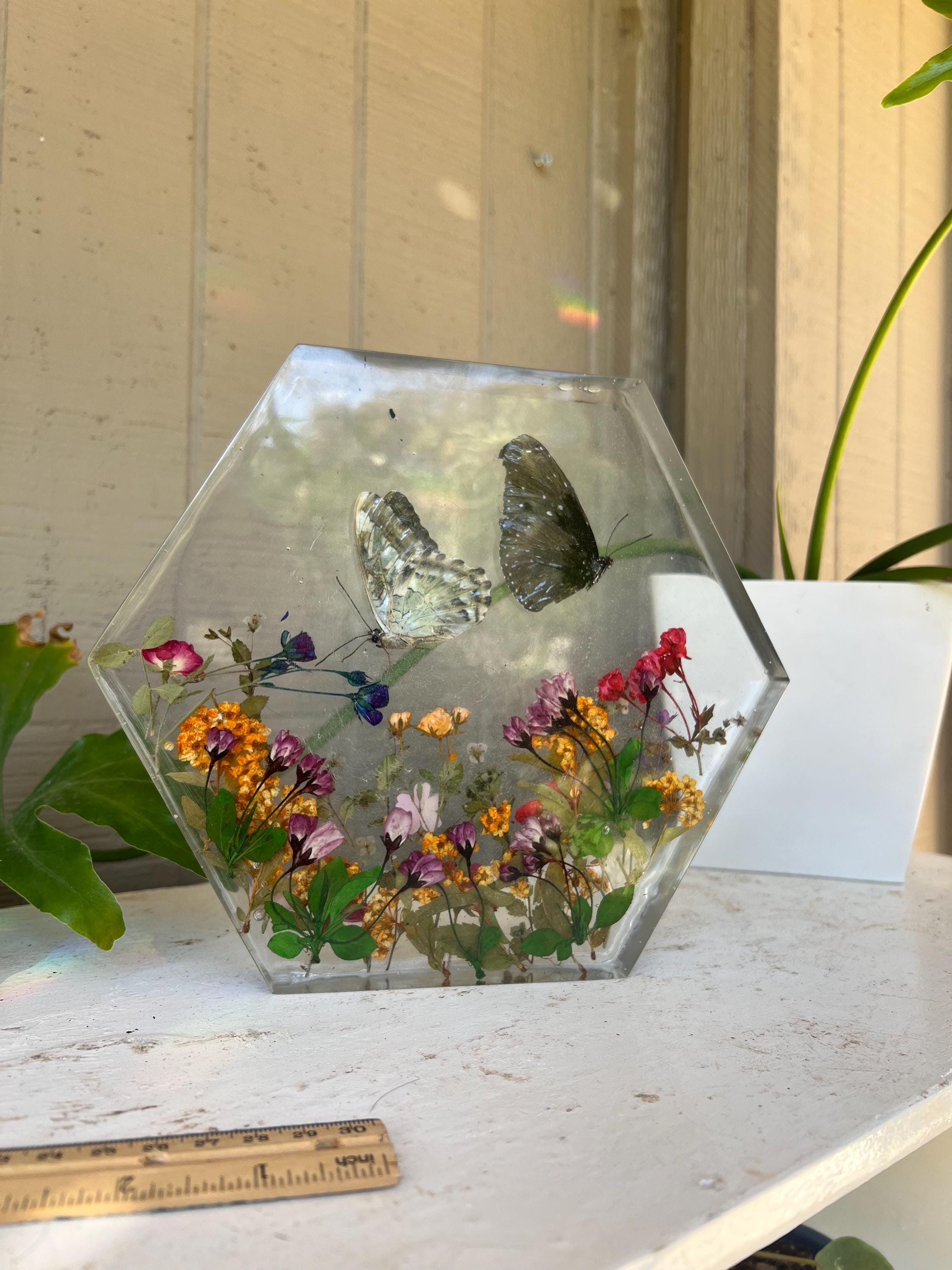
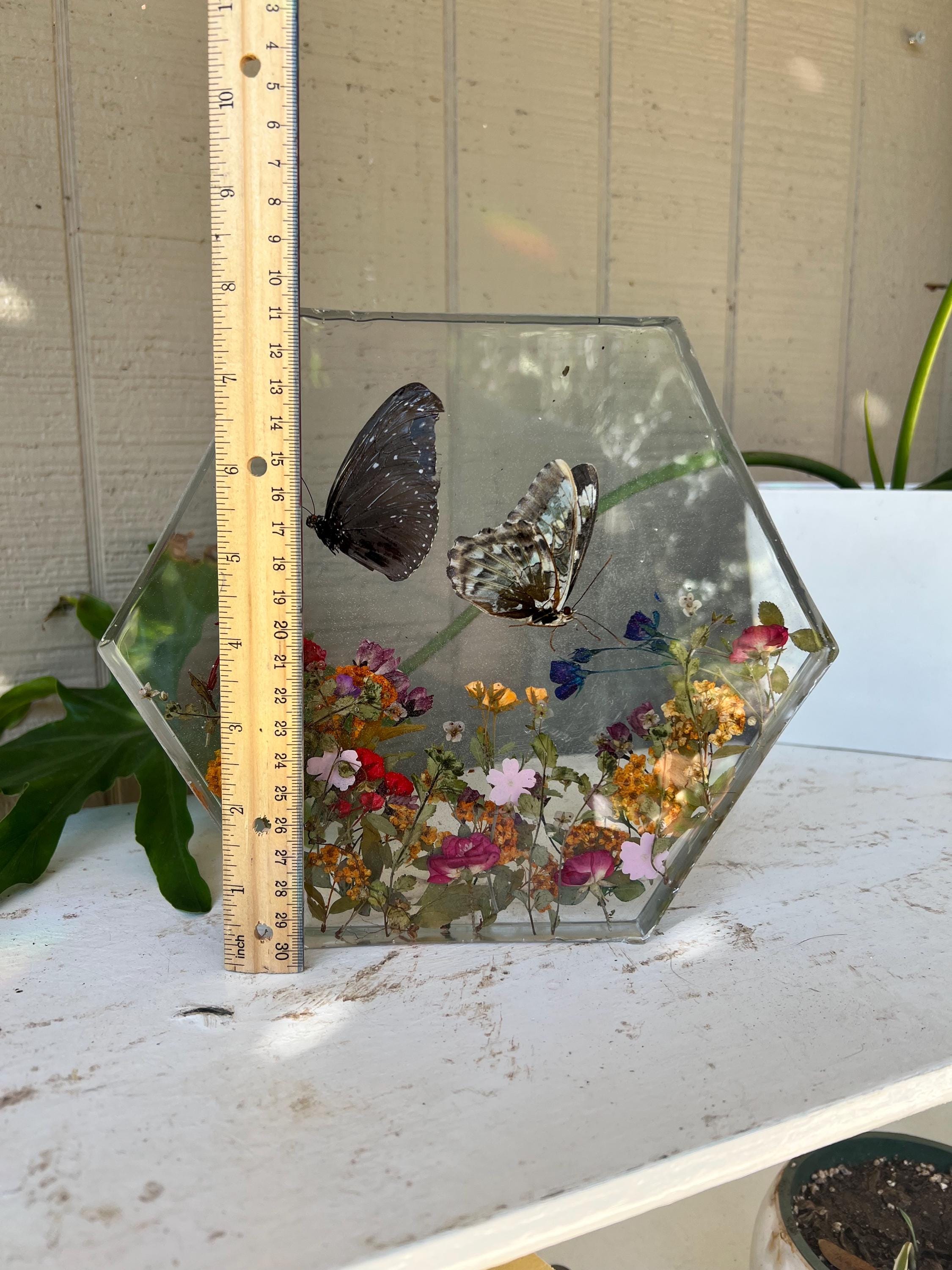
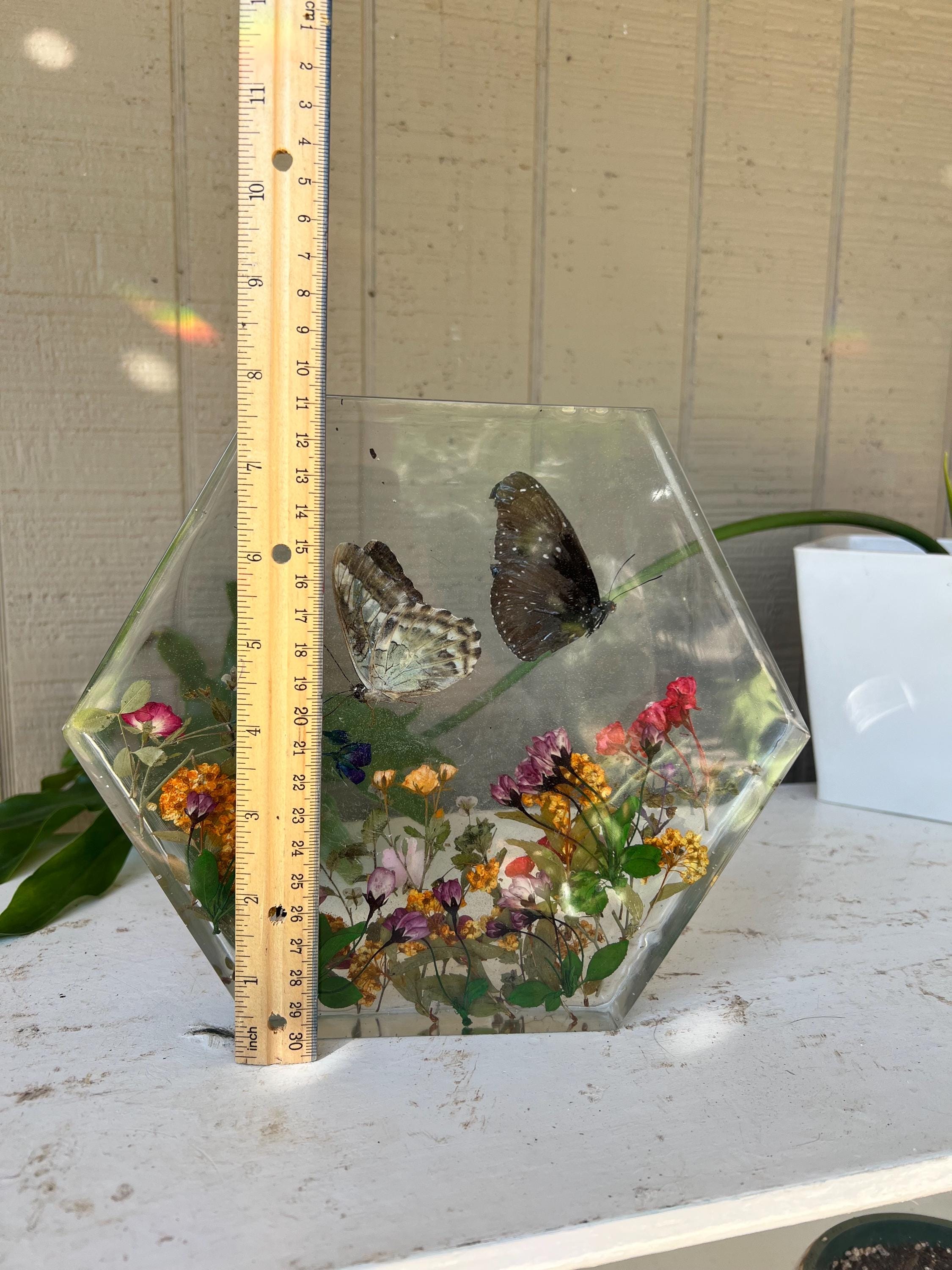
Hexagon Window Display -- Striped Blue Crow + Blue Clipper Butterfly Preserve
$198.00
Each side measures 4 1/2 inches, this Hexagon has a total of six sides.
Enclosed in clear casting resin, a Blue Clipper (Parthenos Sylvia) and a Striped Blue Crow (Euploea Mulciber) are preserved in a large Hexagon Window Display.
The Striped Blue Crow (Euploea mulciber) is a stunning brush-footed butterfly found in India and Southeast Asia, characterized by its extreme sexual dimorphism. Males possess iridescent blue, black-spotted forewings, while females exhibit distinct white streaks on their hindwings. They are highly poisonous to predators, frequently mimicked, and feed on toxic vines.
Key Fun Facts about the Striped Blue Crow:
+Iridescent "Flashing" Flight: The male's wings are a dark, velvety brown/black but appear a brilliant, shining blue when viewed at specific angles in the sun, creating a "flashing" effect during flight.
+Toxic Protection: As part of the danaid group, this butterfly is toxic, storing poisonous compounds from its larval host plants (such as Ficus and milkweed) to deter predators.
+Highly Mimicked: Because they are toxic, other, non-poisonous butterfly species (such as certain Papilionids and Satyrines) mimic the appearance of the Striped Blue Crow to avoid being eaten.
+Female Stripe Pattern: The common name comes from the female's appearance, which features prominent white streaks and spots on her hindwings.
+Unique Caterpillar "Horns": The caterpillar is dark with yellow/white bands and, notably, possesses four pairs of short, fleshy tentacles or filaments on its back.
Cannibalistic Hatchlings: When the larva hatches, its first meal is its own creamy yellow eggshell.
+Shiny Metallic Pupa: The pupa is unique, appearing like a shining, metallic object (often described as gold or silver) hanging from leaves or stems.
Male Scent Organs: Males have specialized scent patches on their hindwings used to attract females.
The Blue Clipper (Parthenos sylvia) is a fast-flying, tropical butterfly from South/Southeast Asia known for its striking blue-green, black, and white striped wings. A favorite of photographers, they often feed with wings open, showcasing their vibrant colors, and inhabit forest areas near rivers.
Fun Facts About the Blue Clipper:
+Unique Flight Style: Clippers are strong, rapid flyers that often alternate between rapid flapping and gliding, frequently flying with their wings in a stiff, horizontal position.
+Photogenic Behavior: They are known to feed on nectar or rest on leaves for long periods with their wings wide open, making them easy to photograph, according to the Nature and Wildlife Facebook page.
+Many "Flavors" and Colors: There are over 30 subspecies of Parthenos sylvia. While often blue-lilac in Malaysia, others can be greenish in India, brownish in the Philippines, or even yellowish in Australia.
Habitat and Behavior: They are often found near riverbanks and, when disturbed, typically fly quickly, making a short circle before resettling close to where they started.
Short Lifespan: The estimated lifespan of an adult Clipper butterfly is roughly 19 days.
Adaptable Larvae: The caterpillars are colorful and feed on plants in the Adenia genus.
_product highlights_
Real butterfly specimen (ethically sourced)
Hand picked and pressed Chamomile flowers
UV-resistant epoxy resin that prevents yellowing or fading
Hand-poured and polished for a smooth, glass-clear finish
Completely unique creation — no two are ever identical.
_the process_
Each butterfly and flower is carefully picked, pressed, dried, prepared, and selected for it's piece before being sealed in layers of high-quality epoxy resin. The resin is poured slowly, layer by layer, allowing air bubbles to release naturally and producing crystal-clear preservation. After curing, the piece is sanded and hand-polished for a professional result that preserves the beauty of nature in timeless form.
This resin butterfly display adds a touch of natural beauty to any home, office, or studio. It also makes a thoughtful gift for:
Butterfly and nature lovers
Botanists and entomology enthusiasts
Collectors of natural history art
Birthdays, anniversaries, or memorial keepsakes
Sustainability
All butterflies are responsibly and ethically sourced, ensuring no harm is done for artistic purposes. Each specimen is naturally expired or sustainably collected.